English
  中文简体
中文简体  Français
  Español
Rechargeable Cordless Table Lamps: The Wholesale Guide for Smart Buyers
Why Cordless Table Lamps Rechargeable Models Are Gaining Traction in the Contract Lighting Market A cordless table lamp rechargeable design solves a ...
Every buyer who has sourced decorative lighting has met the same mismatch: the catalogue drawing looks right, the finish is approved, and then the shade arrives with the wrong footprint, fabric that is thinner than the sample, or a fitter that does not seat properly on the harp. Custom lamp shades remove that uncertainty because every dimension, material, and fitting detail is confirmed before bulk production begins. For importers, wholesalers, and retail brands, the real question is not whether to customise, but how to specify a shade that performs in production, passes quality checks, and still protects the margin. A manufacturer with in-house design, sampling, and production control, such as Yuyao Baolong Electrical Appliance Co., Ltd., can translate a shade concept into a compliant, repeatable SKU. The sections below explain shade types, fitting systems, materials, application planning, and the sourcing workflow that prevents expensive mistakes. If you already have a fixture in mind, the practical first step is to send your drawings to a custom lamp shade manufacturer and ask for measured feedback before any tooling is considered.
Content
Start with the conclusion: the shade is the part of a lamp that customers see first, and it is also the least expensive part to change during development. Two fixtures with identical bases look completely different when one carries an off-the-shelf white drum shade and the other carries a pleated linen shade in a custom colour. When you purchase custom lamp shades from a factory that controls the full production chain, you gain four measurable benefits.
Retail buyers in particular underestimate the effect of the shade on average selling price. A lamp with a carefully sourced shade can move from the value tier to the mid-tier simply because the product looks considered. For hotel and hospitality projects, a custom shade also solves the practical problem of matching hundreds of fixtures across rooms, since every piece is produced from the same approved drawing and material batch.
Wholesale buyers often worry that customisation increases unit cost. In reality, the cost increase is limited when the order is planned around standard sizes, existing moulds, and available fabrics. The price risk comes from vague specifications, uncontrolled sampling, and last-minute changes. Those risks are the reason experienced purchasing teams work directly with a custom lamp shade supplier that can review drawings, flag production issues, and confirm tolerances in writing.
There is also a merchandising angle. A lamp shade is a fast-moving visual element that can be refreshed between seasons without redesigning the whole lamp. A brand can keep the same ceramic base and introduce a new shade colour to create a second generation of the product. That flexibility gives importers a practical way to extend the lifecycle of their best-selling fixtures.
Every custom lamp shade project begins with a silhouette and ends with a material choice. The two decisions are linked, because certain fabrics drape well only on curved frames, and certain glass or metal forms require specific moulds. The table below describes the most common custom lamp shade types and their lighting behaviour, which helps you shortlist candidates before contacting the factory.
| Silhouette | Shape | Typical use | Light character |
|---|---|---|---|
| Drum | Straight cylinder, same top and bottom diameter | Bedside, desk, living room | Even, diffused glow in all directions |
| Empire | Narrow top that flares wider toward the bottom | Classic table lamps, hotel bedside | Moderate downward light with soft edges |
| Bell | Curved flare from a narrow top | Traditional and transitional decor | Decorative accent with controlled downward beam |
| Pleated | Vertical folds formed in fabric or paper | Vintage, romantic, cottage styles | Soft, textured diffusion that reduces glare |
| Conical | Straight angular taper, usually narrow top | Task lamps, contemporary fixtures | Focused downward light, good for reading |
| Square or rectangular | Geometric, with flat panels | Modern and industrial interiors | Structured distribution, visible panel seams |
After selecting a silhouette, the material determines how the shade looks under daylight and under artificial light. The subsections below cover the five material families that dominate commercial lamp shade orders, including their sourcing risks and the finished look they deliver to the consumer.
Fabric shades account for the largest share of decorative lamp sales in Europe and North America. Cotton, linen, polyester blends, and coated fabrics can be printed, pleated, gathered, or laminated to a backing that improves flame retardancy. A pleated shade adds texture that hides dust and gives a handmade feel, while a smooth drum shade reads more contemporary. The most common production issue with fabric shades is seam alignment and pattern matching, so buyers should request a pre-production sample for any printed or striped material. This category also covers special treatments such as waterproof coatings for outdoor or humid environments, and double-layer constructions where an outer fabric is lined with a translucent white inner layer to soften the bulb image.
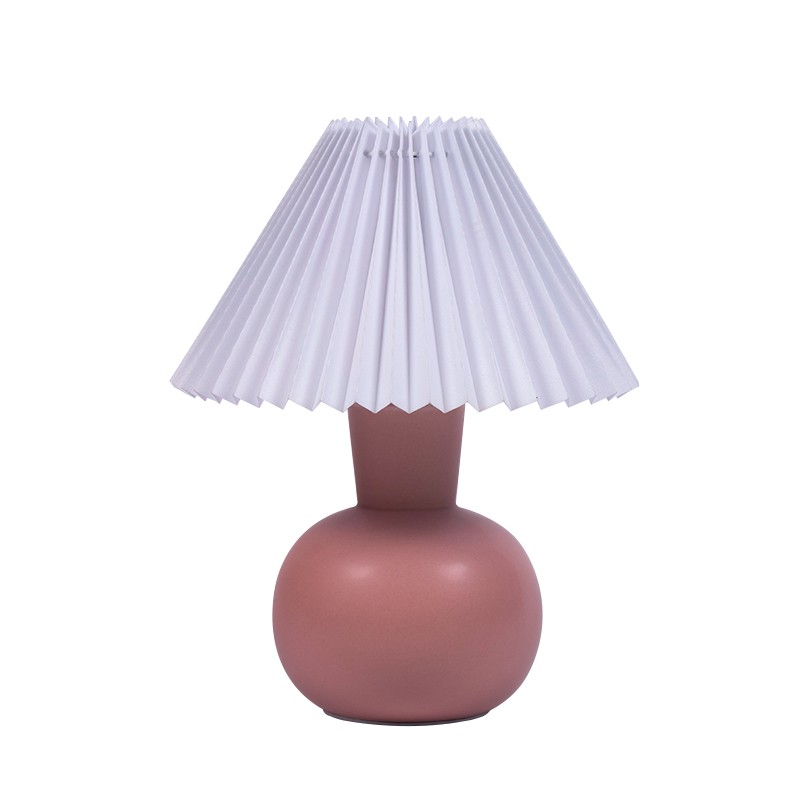
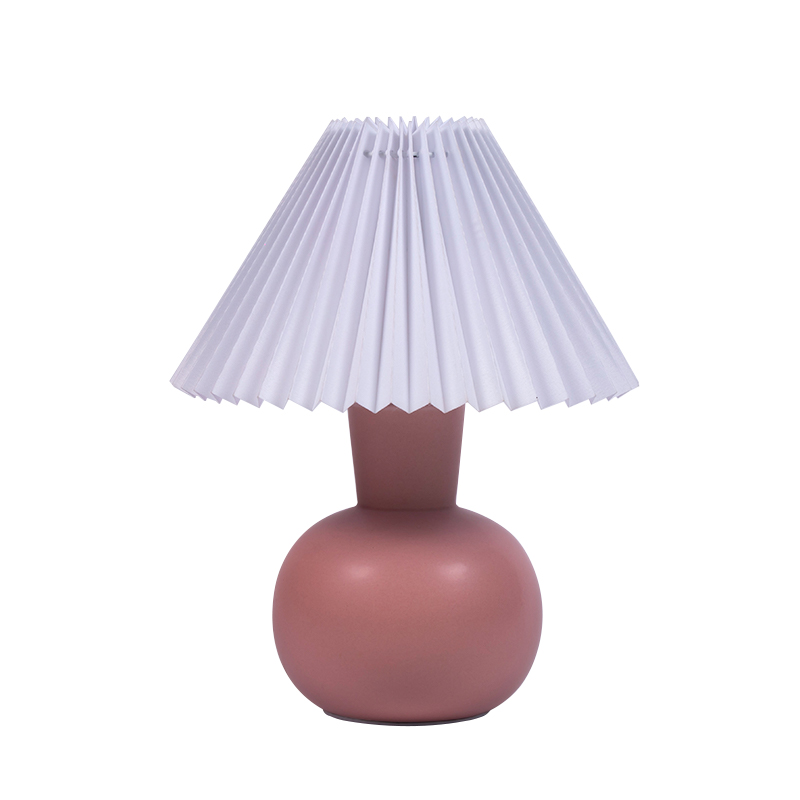 Pleated Cone Table Lamp with Ceramic-Like BaseThis pleated lampshade table lamp pairs a white cone shade that diffuses light softly with a dark brown cylindrical base, making it a strong fit for bedroom and bedside lighting ranges.View Product →
Rice paper, hemp paper, rattan, bamboo, and hand-woven reeds create a warm, diffused glow that suits hotels, resorts, and casual retail ranges. Natural materials are usually fixed to a simple metal ring frame, which makes the shade lightweight and easy to ship. The trade-off is moisture sensitivity: paper and rattan can sag, discolour, or grow mould in humid coastal markets, so the packaging needs desiccant and moisture barriers. Woven shades also require more labour per unit, which is acceptable when the retail story supports a higher price. Buyers who plan a natural-material line should ask whether the factory can apply a thin protective coating without changing the visual texture.
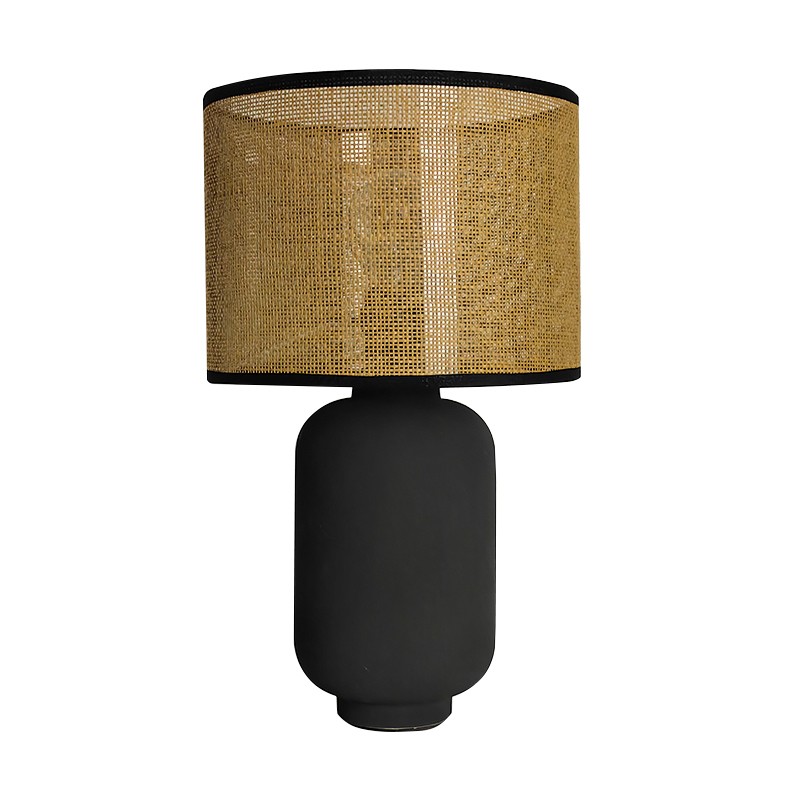
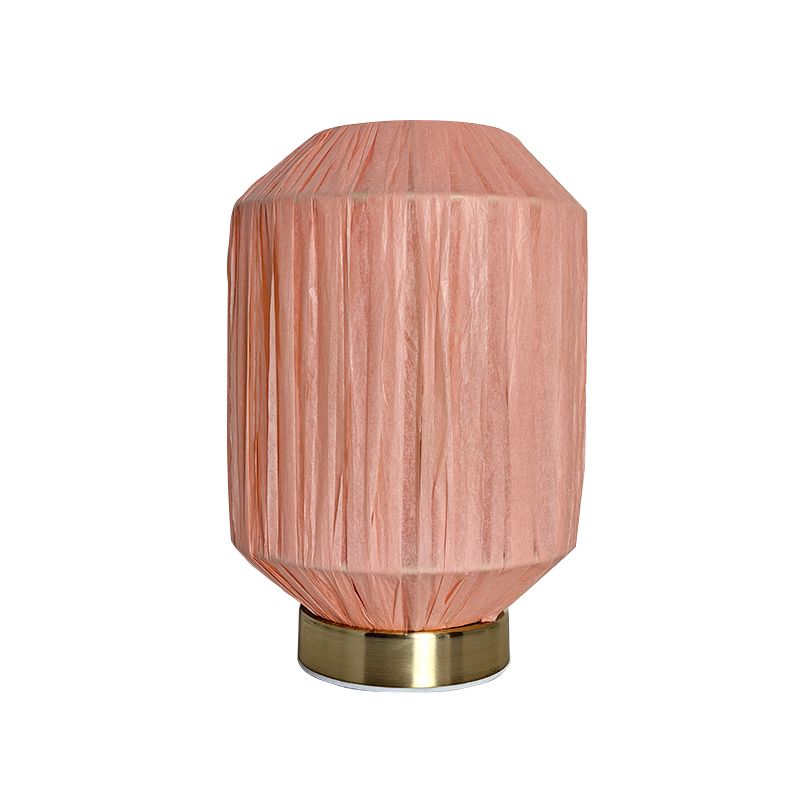 Paper Woven Table Lamp with Metal BaseA natural paper-woven shade over a stable metal base delivers a warm, diffused glow, aligning with the natural-material trend discussed in the surrounding segment for hotels and casual retail.View Product →
Glass shades range from clear and milk-white to amber, smoky grey, and hand-painted patterns. Because glass is rigid, the fitting is usually integrated into the mould, and the shade is fixed with a threaded ring or silicone gasket. Glass transmits more light and shows the bulb clearly, so LED filament bulbs are often specified in the same order. Breakage is the main sourcing risk, and the factory's packaging standard matters as much as the glass quality. Glass shades also create a classic silhouette for chandeliers and pendant fixtures, where each arm carries a small glass cup and the shape of the cup defines the entire style of the chandelier.
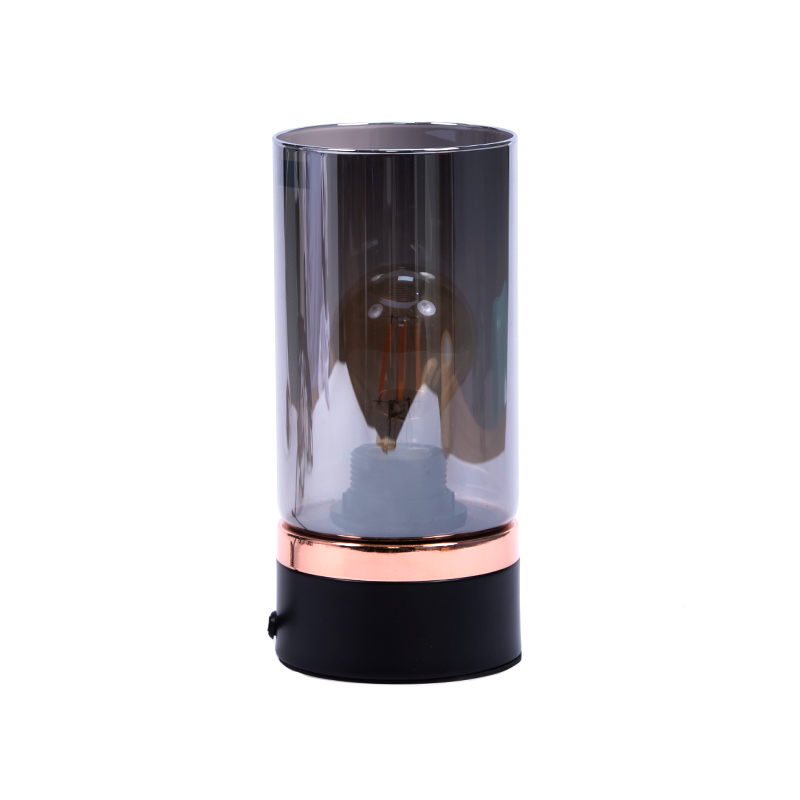 Black Glass Table Lamp with Transparent ShadeThis table lamp combines a clear glass shade with a black base for a stable, classic silhouette, offering a refined option within the glass shade category for chandelier and pendant styling.View Product →
Metal shades are punched, stamped, welded, or wire-formed, and they dominate industrial, mid-century, and outdoor-adjacent lighting lines. Black iron, brushed brass, gold, and copper finishes are common, with perforated or mesh panels to create patterned light on the wall. Metal shades conduct heat, so the socket and wire rating must be checked against the bulb wattage. For custom lamp shades in metal, the key specifications are material thickness, hole pattern, paint adhesion, and edge treatment, since sharp edges are a frequent customer complaint. A hammered or antique finish can hide fingerprints, which is an advantage in high-touch hospitality environments.
Some desk and bedside lamps use the ceramic or resin body itself as the shade, with the light source hidden inside a hollow cavity or bouncing off an interior reflector. Mushroom-shaped ceramic lamps, for instance, deliver a soft upward glow, and resin lamps can be cast in geometric forms that would be impossible with fabric. This approach removes the separate shade component and simplifies assembly, but it adds weight and shipping cost. Buyers should compare the total landed cost of an integrated ceramic lamp against a separate base plus fabric shade, because freight is often the deciding factor.
Experienced buyers know that a beautiful shade can still fail in production if the fitting is wrong. The fitting is the mechanical connection between the shade and the lamp base, and it determines whether the shade sits level, can be removed for cleaning, and remains stable during transport. There are four fitting systems commonly used for custom lamp shades.
| Fitting | How it attaches | Typical use | Buyer notes |
|---|---|---|---|
| Spider | Metal washer sits on the harp; a shade ring holds it in place | Most table and floor lamps | Measured by the opening of the washer; standard sizes 28-40 mm |
| Uno | Threaded ring screws directly onto the socket | Lamps with a threaded socket collar | Tool-free assembly; limited to compatible sockets |
| Clip-on | Two or three spring clips grip a candelabra or small bulb | Small decorative shades, wall sconces | Bulb temperature must be low; LED strongly recommended |
| Euro | Flat washer with a centre hole, fixed by a ring over the harp | European and Australian imports | Slightly different measurement method from the US spider |
Custom lamp shade sizes are never guessed. A proper specification sheet lets the factory cut frames, order fabric, and plan packaging without a single follow-up email. The critical dimensions are listed below, and every one of them should appear on the production drawing you approve.
| Parameter | Typical range | Standard tolerance | Why it matters |
|---|---|---|---|
| Top diameter | 90-300 mm | +/-3 mm | Affects the look at the finial and the fitting size |
| Bottom diameter | 150-500 mm | +/-5 mm | Defines the light pool and the visual balance of the lamp |
| Slant height | 100-400 mm | +/-5 mm | Determines the side profile and the fabric yardage |
| Drop or vertical height | 90-350 mm | +/-5 mm | Controls how the shade relates to the base height |
| Fitter opening | 28-40 mm | +/-0.5 mm | A tight fit prevents rattling and transport damage |
| Seam position | Marked on the drawing | Position fixed by pattern | Pattern alignment matters on printed and striped fabrics |
Tolerances deserve a special note. A difference of 3 mm in the top diameter is invisible to the end user but can mean the difference between a shade that sits flush and one that tilts. The factory should also state the frame wire gauge and the lining colour, because a white lining and a beige lining change the perceived colour temperature of the light. If the order includes a printed fabric, ask the manufacturer to show how the pattern is positioned at the seam and confirm whether the pattern should continue across the seam or stop at it. Seam placement is a common source of rejects because buyers often assume that a repeating pattern will wrap naturally around the cone.
For importers, the greatest risk is ordering from a supplier that cannot produce a consistent frame. Hand-soldered frames can vary in roundness, which shows as ripples in the shade surface. A reputable custom lamp shade manufacturer will measure samples on a go/no-go gauge and send the measurement report together with the sample. Keep that report in your file and compare it with the reports from bulk production; it becomes your evidence if a shipment arrives with distorted shapes.
Material choice usually influences 30 to 50 percent of the final cost of a custom lamp shade. The right material also decides how much light passes through, how the product feels in the customer's hands, and how well it survives long-distance shipping. Buyers therefore need a simple comparison before they invest in samples. The chart below shows the relative cost levels of six material families, based on typical manufacturing inputs such as raw material, labour, and defect rate. Treat the numbers as planning guidance rather than quotations, because actual prices depend on order quantity and finishing.
The chart confirms that ceramic is the most expensive material family for a finished decorative shade, because it requires moulds, high-temperature firing, and careful handling to control breakage. Glass follows closely, and the gap between hand-blown and machine-pressed options is wide enough that buyers should always ask which process has been quoted. Metal sits in the middle because stamping and forming are easy to automate, but hand finishes such as antique brass, hammered texture, or perforated patterns push the cost upward. Natural fibre shades, including rattan, bamboo, and hemp rope, are moderately priced yet labour-intensive, since most weaving is manual. Fabric shades become cost-efficient in mid to high quantities, with polyester blends cheaper than genuine linen or silk. Paper is the least expensive material, which attracts promotional programmes, but its low durability in transit and high moisture sensitivity usually offset the initial saving.
Durability follows roughly the reverse order. Metal and glass are the strongest in standard cartons and can be wiped clean, while ceramic needs edge protection and careful palletising. Fabric shades survive well when the frame is rigid, but the fabric surface can scuff, and pleated edges may soften in hot containers. Paper and natural fibres need desiccant bags and breathable yet protective wrapping. Light transmission tells a completely different story. Fabric and paper diffuse strongly and create a warm, even glow around a reading chair. Glass gives a clearer wash of light depending on its tint and thickness. Metal and ceramic direct light downward and create stronger shadows, which suits task lighting and accent lighting. That is why many commercial programmes combine a hard outer shell with a fabric or frosted diffuser inside. The final material decision should be based on the fixture's position, the packaging budget, and the retail price point you need to defend.
| Material | Light transmission | Durability | Cost level | Typical finishes |
|---|---|---|---|---|
| Fabric | High diffusion | Medium | Medium | Pleated, printed, laminated, gathered |
| Glass | Moderate to high | High | Medium-high | Tinted, frosted, clear, hand-painted |
| Metal | Low | High | Medium | Painted, antique, perforated, hammered |
| Natural fibre | High diffusion | Medium | Medium | Woven, braided, double-layer |
| Paper | High diffusion | Low | Low | Folded, glued, laminated |
| Ceramic | Low to moderate | High | High | Glazed, matte, textured, gradient |
Lead time is the second decision factor after cost. Fabric shades with ready stock fabric can be produced in 20 to 30 days, while custom printed fabric adds 10 to 15 days for the printing cycle and drying. Glass shades depend on the mould and the annealing schedule, so buyers should confirm whether the factory already has the mould for the desired shape. Natural fibre shades are usually the slowest because weaving is manual and skilled workers are limited. A reliable manufacturer will give you a lead time per material family, not a single generic promise, and will confirm the date in the purchase order.
When comparing quotations, ask the supplier to break down the price by material, labour, and packaging. That breakdown reveals whether a low quote comes from cheaper fabric, thinner metal, or simply a tighter production schedule. As a buying rule, order one sample per material family before committing to bulk. The cost of a sample is always lower than the cost of a rejected container.
Different final users buy lighting for different reasons, and the shade specification should follow the application, not the other way around. Hotel buyers value consistency and easy maintenance. Restaurant and hospitality buyers value atmosphere and fire compliance. Retail and e-commerce brands value shelf impact and packaging density. Importers who supply multiple channels should build a short list of shade specifications that can be reused across projects, because reuse lowers sample cost and speeds up production planning.
Drum or empire shades, 250-400 mm bottom diameter, fabric or pleated material, ideal for bedside and decorative programs.
Large drum or bell shades, 350-450 mm bottom diameter, stable proportions, often with a double-ring frame for rigidity.
Smaller individual shades on multiple arms, glass or metal, open top for bulb replacement and even light spread.
Compact clip-on or uno shades, open top and bottom, suited for hallways, bathrooms, and accent lighting.
The two-column overview below connects common project scenarios to the shade qualities that matter most in each case. Use it as a checklist when you brief the factory.
Common project scenarios
|
Selection points for buyers
|
Beyond the application, the buying channel changes the specification. An e-commerce brand that sells through a marketplace needs shades that survive multiple parcel shipping steps and simple customer assembly. A distributor selling to hotel projects needs shades that match the interior designer's colour scheme exactly, which means the supplier must control dye lots and offer a reserved batch for future refills. A wholesaler moving mixed containers wants a standard shade range that can be combined with table lamp bases, floor lamp columns, and wall fixtures in the same container to maximise freight efficiency.
Working directly with a factory changes the economics of custom lamp shades. Instead of paying a trading company's markup, you pay for material, labour, and a margin that reflects the manufacturing cost. The factory described in this guide, Yuyao Baolong Electrical Appliance Co., Ltd., is a Chinese manufacturer with 6,500 square metres of production space, more than 130 employees, and annual sales above six million US dollars, exporting mainly to Australia, Europe, and North America. It accepts both OEM and ODM orders, which matters for buyers who need standard lamp shade OEM production under their own brand or a fully developed design produced from a sketch. You can review the scope of their production support on the OEM and ODM service page before sending an inquiry.
A typical custom lamp shade order follows six steps. The list below assumes the buyer already has a lamp base and needs the shade to fit a specific fixture.
MOQ for custom lamp shade orders from Chinese manufacturers usually ranges from 500 to 2,000 units, depending on the material. Standard moulds and ready fabrics allow lower MOQs, while printed fabric, custom glass, or woven natural materials push the minimum upward. Lead time follows a similar logic: 7 to 15 days for samples, and 25 to 45 days for bulk production after sample approval, excluding sea freight. Quality control should be agreed in writing, with the most common lighting standard set at AQL 2.5, meaning a normal inspection level with 2.5 percent major defects as the rejection threshold. Buyers should also ask for the CE, ERP, and RoHS certificates on the finished lamp, not just on the LED driver, because the shade material and the glue can also contain restricted substances.
| Destination market | Typical requirement | What to confirm with the factory |
|---|---|---|
| European Union | CE (LVD/EMC), ERP, RoHS, REACH | Test report issued by an accredited lab; material and glue included |
| United States | UL or ETL listing depends on the channel | Whether the shade needs a UL classification label |
| Australia | RCM mark for electrical safety | Mains voltage assumed 220-240 V, plug and cable check |
| Global markets | Flame retardant fabric test | BS or EN standard used; retest needed for each fabric batch |
Cost engineering plays a large role in custom lamp shade programs. A good factory will propose changes that reduce cost without changing the visible design: using a standard mould instead of a new one, choosing a stock fabric width that minimises waste, or adding a lining that stabilises a flimsy cover material. These proposals should come as written alternatives with a clear price difference. Buyers should also discuss who owns the mould after the order. In most Chinese factory agreements, the mould becomes the buyer's asset once paid, which allows the buyer to transfer production if needed, but the physical mould stays at the factory unless it is shipped.
Importers who request a quote should include the fixture's technical drawing even if the design is simple. A drawing prevents the most common error: choosing a shade size based on a photo, then discovering that the harp is too short or the socket ring is too large. Many factories will suggest a change to the base design, such as increasing the harp height, if it allows a standard shade mould to be used. That kind of engineering feedback is exactly why a manufacturer with in-house development, rather than a trading company, is a better partner for long-term lighting programs.
Custom lamp shades should remain marketable for years, but the material determines what the end customer can do to keep the shade clean. Distributors and brands that include care instructions in the retail box reduce the number of returns and negative reviews. The table below gives practical care directions for the main shade materials.
| Material | Cleaning method | Frequency | Important caution |
|---|---|---|---|
| Fabric | Soft brush or low-suction vacuum with a brush nozzle | Every 2-3 months | Never soak; water can shrink the fabric and warp the frame |
| Glass | Microfibre cloth with a mild glass cleaner | Every 1-2 months | Check the socket is off and the shade is cool before touching |
| Metal | Damp cloth, then dry wipe | Every 1-2 months | Avoid abrasive pads on painted or antique finishes |
| Natural fibre | Dry dusting only, no moisture | Every 3 months | Excess humidity causes sagging and mildew, especially in coastal areas |
| Paper | Soft dry brush or blower | As needed | Paper cannot be washed; handle by the frame, not the surface |
| Ceramic | Damp cloth, then dry | Every 1-2 months | Check the glue joint under the shade once a year |
A few additional rules apply to all custom lamp shades. Always recommend LED bulbs to customers because they generate less heat than incandescent bulbs, which extends the life of glued seams and pleated fabric. Advise customers to hold the shade by the frame when they change a bulb. For shades shipped in warehouses, store them upright with the frame protected, never stacked with weighted cartons on top, and keep the cartons in a dry room with relative humidity below 70 percent. If a shade is designed to be washable, the factory should state the maximum temperature and cleaning agent on the packaging. Careful storage and cleaning guidance also protect the brand: a shade that discolours or deforms after three months generates more complaints than almost any other lighting defect.
Buyers who contact a lighting manufacturer for the first time usually ask the same practical questions. The answers below reflect the typical working model of an experienced custom lamp shade supplier, including the factory described in this guide.
What is a typical MOQ for custom lamp shades from a Chinese manufacturer?For fabric and metal shades, MOQs usually start at 500 to 1,000 units. Printed fabric, custom glass, and hand-woven natural materials may raise the minimum to 2,000 units. Many suppliers accept a lower MOQ for the first order to build the relationship, but the unit price will be higher. Plan your first container with a mixed set of lamp bases and shades so you can meet quantity thresholds across the whole order. |
Can I order one or two samples before committing to bulk production?Yes. Sampling is the normal first step. The factory will charge a sample fee plus freight, and the fee is usually deducted from the bulk order once it is placed. Ask for a pre-production sample, not a lab sample, because the pre-production sample uses the same frame, fabric batch, and fitting that will be used in mass production. Verify the dimensions with a ruler and check the fitter against your own harp. |
What certifications should custom lamp shades meet for the US and EU markets?For the European Union, the finished lamp normally needs CE, RoHS, and ERP documentation, and the shade fabric should pass a flame-retardant test. For the United States, the requirement depends on the sales channel; large retailers often require UL or ETL listed products, while smaller e-commerce sellers may accept a compliance statement. Always ask the manufacturer to include the certification for the complete lamp, not only for the LED driver, because glue, paint, and fabric also carry compliance obligations. |
How do I measure my fixture for a custom lamp shade?Measure the harp height, socket collar diameter, base height, and the overall lamp height. For a table lamp, the shade should be about two-thirds of the fixture height, and the bottom edge should sit below the socket but above the base. Send the manufacturer a drawing with these numbers, plus a photo of the harp and socket, so the factory can recommend the top diameter, bottom diameter, and slant height together with the fitting type. |
Which material is best for a hotel or restaurant project?Hotels usually prefer fabric shades with a flame-retardant backing and an easy-to-clean surface, mounted on a spider or uno fitting for simple replacement. Restaurants that want a stronger design statement often choose glass or perforated metal because these materials are durable, easy to wipe down, and provide dramatic light patterns. Keep in mind that the maintenance team will actually service the fixtures, so removable shades with standard fittings are preferred over glued one-piece constructions. |
How long does a custom lamp shade order take from sample to delivery?A typical schedule is 7 to 15 days for sample production, 3 to 5 days for your approval, and 25 to 45 days for bulk production after confirmation. Sea freight from Ningbo or Shanghai to Europe, Australia, or North America takes 25 to 40 days. For a seasonal programme, start the sampling process at least four months before your planned in-stock date so there is enough buffer for colour approval and any shipping delays. |
Custom lamp shades are a category where careful specification translates directly into sales performance. The first step is to define the silhouette and the fitting, the second is to select a material that matches the light effect and the destination market, and the third is to confirm tolerance, compliance, and packaging before mass production. Buyers who follow that sequence avoid the two most common failures in the industry: the shade that does not fit the base and the shade that looks different from the approved sample.
For importers and wholesalers looking for a reliable production partner, the practical next move is to prepare a short product brief and send it to the factory. Yuyao Baolong Electrical Appliance Co., Ltd. covers table lamps, floor lamps, chandeliers, and wall lights with ceramic, glass, metal, iron, LED, and natural-material lines, so the same supplier can manage a complete lighting range under one quality system. You can request a quotation and delivery plan through the contact page, which is the fastest way to get a measured opinion on your custom lamp shade project.
Why Cordless Table Lamps Rechargeable Models Are Gaining Traction in the Contract Lighting Market A cordless table lamp rechargeable design solves a ...
Every buyer who has sourced decorative lighting has met the same mismatch: the catalogue drawing looks right, the finish is approved, and then the sh...
A common complaint that reaches a lamp manufacturer's inbox reads like this: the sample arrived, the ceramic base looked right, but the shade swallow...
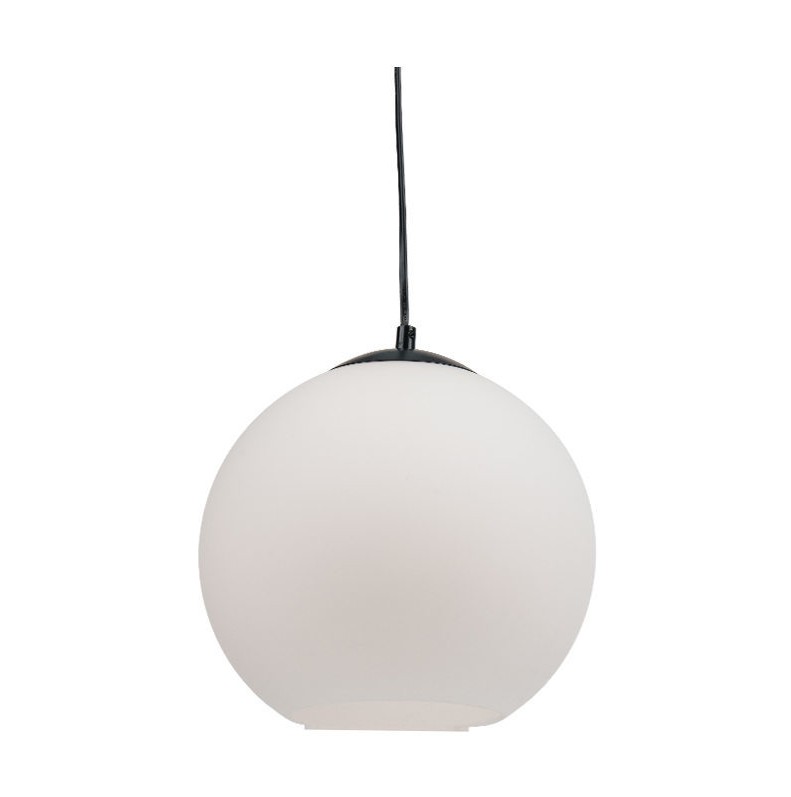
Decoration Pendant Lamp Basics: Direct Answer and Quick Overview A decoration pendant lamp is a ceiling-suspended lighting fixture that hangs from a ...

 No.11 Gongji South Road, Linshan Town, Yuyao City, Zhejiang Province, China
Copyright ? Yuyao Baolong Electrical Appliance Co., Ltd. All Rights Reserved. Wholesale Decoration Lamp Manufacturer Decoration Lamp Factory


bla@yybaolong.cn

+86-18868663339
+86-574-62067336