English
 中文简体
 Français
 Español

Touch Lamp Sourcing Guide: Specifications, Types, Dimming and Buying Risks
Twelve touch lamp samples arrive at a hotel refurbishment office. On the bench they behave exactly as the catalogue promises: one tap for on, a secon...
Twelve touch lamp samples arrive at a hotel refurbishment office. On the bench they behave exactly as the catalogue promises: one tap for on, a second tap for brighter, a third for dim, a long press to switch off. Then the samples go into a real guest room, next to a 7 W dimmable LED retrofit and a bedside socket shared with a phone charger. Three of the twelve flicker on the second touch, two ignore a fingertip in dry winter air, and one switches itself on when a guest sets down a metal tray.
The gap between the bench and the room is where this guide begins. A touch lamp is an electronics purchase wrapped in a decorative housing. The glaze, the shade and the silhouette win the sample meeting, but the sensing module, the driver and the ground reference decide the return rate nine months later.
Most touch lamp work that reaches a factory like ours comes from importers, wholesale distributors, private label brands and hospitality spec teams, not from individual shoppers. Those buyers rarely ask for a touch lamp in the abstract. They ask for a bedside model with a three step dimmer that survives hotel housekeeping, or a ceramic base whose sensor still responds when the room sits at 30% relative humidity. This article answers that version of the question, from the sensing principle through to inspection and after sales support.
The order below follows a real sourcing project: mechanism first, then the specifications that separate a stable design from an unstable one, then the material families and what each does to the sensor, a scoring model for sample approval, application and selection logic, export compliance, field maintenance, the OEM and ODM conversation, and finally the questions buyers ask most often.
A touch lamp almost never fails for the reason the product photo suggests. Module quality, driver compatibility and grounding account for the majority of field complaints.
Content
Capacitive sensing is older than most buyers assume. The same principle once lit the call buttons of mid century elevators: a fingertip couples the human body to ground, the circuit detects a tiny change in capacitance, and a switching stage reacts. In a domestic touch lamp the electrode is usually a copper pad bonded inside the base, or a metal plate that doubles as the body itself. The assembly is tuned so that a fingertip crosses the threshold while a passing sleeve, a tablecloth or a change in room temperature does not.
A touch module is three functions on one small board: the electrode connection, a controller with threshold and debounce settings, and an output stage that drives a triac, a relay or a MOSFET. Cost is won or lost in the controller. Inexpensive modules run a fixed threshold that drifts with temperature and humidity; better ones recalibrate at every power up and reject slow changes such as a hand resting flat on the base. The difference is invisible on a spec sheet and very visible in a complaint log.
Debounce matters as much as threshold. A module without adequate debounce registers the bounce of a firm tap as two or three presses, so a guest who taps once to turn the lamp on finds it already at the third dim step. Good firmware waits roughly 50 to 150 milliseconds before committing a state change, and separates a tap from a long press by time rather than by force.
Most bedside touch lamps use three step logic: full output, then roughly half, then a low night level, then off. A second family uses stepless dimming, where a long press ramps brightness up or down and a short tap returns to the previous level. A third adds memory, so the lamp restarts at the level it was left at. Each has a market.
The most common cause of a dead or erratic touch function is a weak ground reference. Many markets wire lighting circuits with two cores and no earth, and a Class II lamp then relies entirely on body coupling. That works, but the sensitivity window narrows. The same lamp that responds instantly to a barefoot guest on a tiled floor may ignore a gloved hand standing on a wool carpet.
We test touch behaviour in three conditions before approving a design: bare hands on a dry floor, shoes on carpet, and a thin knitted glove. A module that passes only the first condition is a module that will generate distributor complaints in winter. Where the housing is metal, the module also needs deliberate isolation from mains potential, because the surface a guest touches is the electrode.
A touch module switching a resistive filament load behaves predictably. The same module switching a 5 W LED driver can leak enough current through the driver's suppression capacitors to leave the lamp glowing faintly when off, or to confuse the next touch reading. The usual fixes are a compatible driver with a defined minimum load, a bleeder resistor to absorb leakage, or a module rated for the lower load. All three are decided at the sample stage, not after the container is packed.
Pair the module and the light source deliberately. A touch lamp specified module first and driver second will eventually show a residual glow, a dead band at the lowest step, or a flicker that appears only on the last 5% of the dimming range.
Specify the sensing module and the LED driver as a matched pair. Any compatibility issue found after tooling is paid for becomes a redesign, not an adjustment.
A specification only protects a buyer when it is written as a number with a tolerance and a test method. "Sensitive touch function" is not a specification. "Registers a fingertip within 0.3 seconds in three defined hand conditions, and does not register a 3 mm folded cloth" is one that a factory can pass or fail, and that an inspection team can witness.
The table below is the parameter set we recommend putting into a purchase order, together with the failure mode that appears when the item is left vague. The values are practical targets for a mid to premium touch lamp rather than regulatory minimums, which are covered later.
| Parameter | Target for a stable design | Failure mode if left loose |
|---|---|---|
| Touch response | Fingertip registers in under 0.3 s; a 3 mm cloth contact does not | Missed touches in dry air, phantom switching through a tablecloth |
| Dimming steps | Three distinct levels or stepless, no dead band between steps | Visible jump, flicker at the lowest level |
| Standby power | At or below 0.5 W in the off state | Retail rejection in Europe, energy audit failure |
| Minimum load | Driver stable from 3 W up to rated load | Faint glow when off, blinking on the night setting |
| ESD immunity | Plus or minus 8 kV contact and 15 kV air at the base exterior | Dead module after a dry winter static discharge |
| Sensor life | 50,000 actuations without threshold drift | Intermittent response after 18 months in service |
| Humidity range | Stable from 20% to 85% relative humidity, non condensing | Phantom switching in coastal hotels and bathrooms |
| Insulation | SELV on the touch side, adequate creepage on the mains side | Safety file failure at the certification stage |
| Finish match | Colour difference at or below 1.5 against the approved sample | Mixed shades inside a single container |
| Carton drop | 80 cm, six faces, no module displacement | Dead on arrival claims from the distributor |
Two of these rows deserve more attention than they usually receive. The first is standby power, because it is checked by authorities rather than by end users, and a batch that misses the limit cannot be sold in the market it was made for. The second is carton drop, because a touch module is a small rigid board mounted inside a heavy ceramic or metal base. When the base moves inside the carton, the board and its wiring take the shock, and the lamp arrives with a working light and a dead sensor.
Write the tolerances into the order confirmation, keep a signed golden sample with the inspection team, and photograph the module mounting at approval. Those three habits resolve most disputes before they become claims.
Every vague line in a touch lamp specification becomes a field failure clause later. Numbers, tolerances and a test method are the only real protection.
Housing material is not only an aesthetic decision. It changes the dielectric behaviour around the electrode, the mechanical route the fingertip force takes, and the way moisture reaches the board. A glaze seals a ceramic body; a woven fibre shade breathes; a painted steel base can carry static for minutes. The same module can feel crisp in one housing and sluggish in another.
Dense, glazed and dimensionally stable. The electrode is bonded inside, and the glaze keeps humidity away from the board. Wall thickness variation changes the coupling distance, so a supplier must control both wall thickness and pad position.
Thin walls give strong coupling and a very light touch. The trade off is fragility near the electrode and the need for a properly supported board that does not rest on the glass.
The body itself can act as the electrode, which gives the crispest response. It also demands careful isolation from mains potential and a decision on painted versus bare finish, because a thick powder coat dampens sensitivity.
Rattan, bamboo, paper and hemp rope add warmth but absorb moisture and build static. A hidden plastic sub base under the weave keeps the sensor stable across seasons.
Resin moulds complex shapes cheaply, including mushroom and geometric forms. Shrinkage and post cure movement can lift the pad away from the inner wall, so a mechanical retainer is safer than adhesive alone.
A battery cell, a charging port and a low voltage sensor make a portable lamp that works without fixed wiring. Compliance follows a different route, including transport rules for lithium cells.
Ceramic is the most forgiving family for a touch design, which is why so many bedside models in our catalogue use it. A glazed body gives a consistent dielectric layer, the mass absorbs the tap, and the sealed surface survives hotel cleaning. Ceramic also hides the electrode completely, so the guest sees nothing but a smooth base.
 Bedside Ceramic Table Lamp for Hospitality InteriorsA ceramic bedside lamp with a glazed, sealed body that suits hotel cleaning and hides the touch electrode for a smooth base.View Product →
Glass and metal move in the opposite direction: they give a sharper response and a more contemporary look, but they leave less margin. A metal base needs the sensor isolated from the shell, and a glass base needs a board that cannot be stressed when the lamp is lifted by the shade. Natural fibre housings sit in the middle. They feel warm and suit boutique and homestay interiors, but they require a stable sub structure so that humidity changes do not turn the sensor into a switch that reacts to the weather.
Light source choice completes the picture. Fabric shades with a warm white source at 2700 K to 3000 K and a colour rendering index above 80 suit bedrooms and hospitality. Clear glass shades with an exposed source read cooler and need a diffused LED to avoid glare at eye level. Rechargeable models with a low voltage sensor are the fastest growing category for restaurant terraces and rental apartments where no bedside circuit exists.
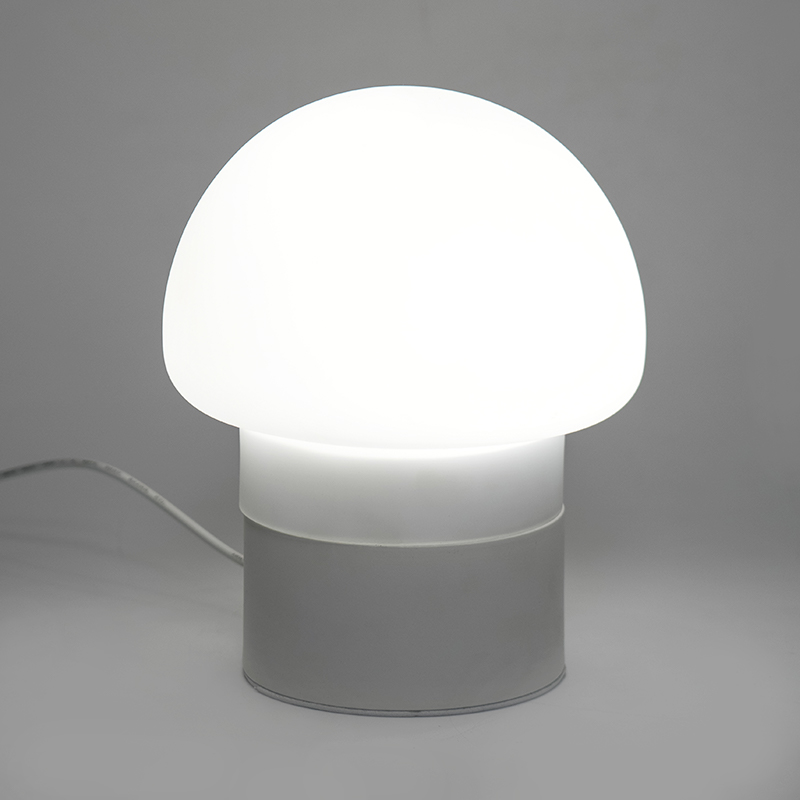 OEM/ODM LED Mushroom Table Lamp with Soft, Uniform LightA bionic mushroom-shaped desk lamp using flicker-free LED beads for soft, uniform, glare-free illumination; offered for OEM/ODM inquiry and custom orders.View Product →
Choose the housing and the module together. A design approved on appearance alone will be re engineered once the sensor meets the material.
Before a touch lamp design goes to a bulk order, we run the same sample through a fixed checklist so that two engineers reach the same verdict.
The weighting below is a working tool from our own quotation review, not a market survey, so read it as a checklist rather than as a statistic.
Two items carry the most weight, dimming repeatability and sensing stability, because they produce most of the complaints that reach a distributor six months after delivery.
Certification paperwork and finish consistency come next, since both are slow and expensive to correct once the containers have sailed.
The remaining items, from EMC behaviour to carton drop performance, are cheaper to control but still decide whether a container arrives sellable.
The chart reads left to right as a decision order rather than a set of independent scores. Dimming repeatability sits at the top because it is the one behaviour a buyer can demonstrate in ten seconds and the one a guest notices immediately. If the third step does not land cleanly, no amount of good glazing rescues the sample. Sensing stability follows closely, and the two are linked: a module with a marginal threshold will usually show up first as an inconsistent dim step, then as a missed touch.
Certification documents score highly because they are binary. A sample with excellent light quality and no valid file number cannot ship to a European retailer at all, so the review treats paperwork as a gate rather than a preference. In practice this means we ask for the certificate and the report before the aesthetic discussion, not after.
Finish match carries a weight of 72 for a specific commercial reason. A distributor ordering 2,000 units in three colours will split them across several production runs, and a colour difference of 2 or 3 units against the approved sample turns into a mixed pallet that a retail buyer refuses. Ceramic glaze in particular shifts between kiln loads, so the golden sample has to be stored under controlled light and compared under the same light.
EMC behaviour and driver compatibility sit in the middle of the scale because they are rarely visible in the sample room but frequently visible in a customer's living room. A switching module that radiates above the limits will fail an EMC scan, and a driver that pairs badly will leave a faint glow at night. Both are inexpensive to fix before tooling and expensive after.
Standby power and carton performance sit at the lower end, which does not mean they are optional. It means they are usually solved by standard practice rather than by design debate: a compliant module, a defined off state, and a moulded insert that holds the base and the shade separately. When a supplier cannot show those two items as routine, that is itself a warning about process discipline.
The useful habit is to score two samples from two suppliers on the same sheet and compare the totals rather than the impressions. A 12 point gap between suppliers usually reflects a real difference in module grade, not a difference in mood.
Score samples on one written sheet. A supplier that wins on dimming repeatability usually also wins on the items further down the list.
A hotel guest room and a family bedside table use the same hardware but need different decisions. The hotel needs predictability, cleanability and a low night level that does not wake a partner. The home needs a wider dimming range, a shape that suits the room, and often a reading function with an adjustable arm.
| Hotel guest room programme | Home bedside and reading |
|---|---|
Priorities
|
Priorities
|
Beyond those two profiles, five application patterns come up repeatedly in enquiries. Bedside in hotels and serviced apartments, where the lamp must survive both guests and cleaning crews. Reading and study, where the arm geometry and the glare control matter more than the base material. Children's rooms, where a low night level and a smooth, cool to the touch surface matter more than output. Restaurant and lounge corners, where a rechargeable touch lamp removes the need for floor boxes. Rental and short let apartments, where a touch lamp avoids a visible switch on a wall that cannot be chased.
Selection logic then narrows quickly. If the room has no earthed circuit and the lamp is Class II, choose a ceramic or timber housing with a well isolated pad rather than a bare metal shell. If the client insists on metal, specify the isolation method in writing. If the lamp will sit within reach of a bath or shower, treat it as a bathroom fitting and confirm the ingress protection rather than assuming a general purpose lamp is acceptable.
 Metal Swing Arm Bedside Lamp with Marble BaseA bedside lamp with curved shade and polished white marble base, suited to reading geometry; metal joints need life testing for wear and cable routing.View Product →
For reading applications, an adjustable metal swing arm solves the geometry problem: the base stays on the nightstand while the head reaches over a book. The trade off is that every joint is a potential wear point, so the arm tension and the cable routing need a life test rather than a visual check.
Decide the application before the appearance. Hotel, reading, children's room and bathroom uses each pull the specification in a different direction.
A touch lamp contains a switching circuit, so it is treated as an electrical product rather than a decorative object. That single fact determines the document set a buyer needs before the goods can be offered for sale in each market.
For the European Union, the practical package is the Low Voltage Directive or the applicable part of it for mains connected lamps, the EMC Directive for the switching module, RoHS for material restrictions, and the energy related product rules that set the standby limit. A declaration of conformity, a test report from a recognised laboratory and a technical file that describes the module and the driver are the minimum. The United Kingdom follows a parallel route with its own marking. For the United States and Canada, a nationally recognised mark from a testing body is what retailers ask for, and the touch module appears in the file as a component, which is why the module's own certificates should be collected at the sample stage. Australia and New Zealand require the applicable electrical safety mark and, for some products, an energy efficiency registration.
Electromagnetic behaviour deserves separate attention because the touch module switches current in short bursts. Radiated and conducted emissions have to be measured with the actual driver and the actual cable length, not with a laboratory substitute. A design that passes with a 1 m cable can fail with the 1.8 m cable that the market expects.
A compliance gap is rarely discovered at the port. It is discovered by a retail buyer's compliance team three weeks before a launch, which is exactly when a replacement test report cannot be produced quickly enough.
Collect the module, driver and complete lamp documentation at the sample stage. Compliance assembled after the order is compliance assembled too late.
Most touch lamp complaints fall into seven patterns, and each has a small set of likely causes. Giving a distributor this table shortens the loop between a complaint and a replacement decision, and it prevents good lamps from being scrapped for a fixable reason.
| Symptom | Likely cause | First action |
|---|---|---|
| No response at all | Module unseated in transit, or wiring harness disconnected at the base | Open the base and check the connector before replacing the lamp |
| Responds only to bare hands | Marginal threshold, weak ground reference, very dry air | Test on a second circuit and confirm against the golden sample |
| Switches on by itself | Humidity ingress, or a conductive object resting on the base | Inspect the seal and the pad area, check the room humidity |
| Flicker at the lowest step | Driver below its minimum load, or an incompatible dimming method | Pair with a driver rated for the load, add a bleeder if needed |
| Faint glow when switched off | Leakage through the driver's suppression capacitors | Confirm the module and driver pairing, replace the driver |
| Works, then stops after minutes | Thermal drift in a low grade module, or a loose pad | Replace the module; report the batch for trend analysis |
| Works on one socket but not another | Socket polarity or a shared circuit with a noisy load | Test on an isolated circuit before judging the lamp |
Maintenance is mostly about what not to do. Clean the base with a soft damp cloth and a neutral detergent, then dry it, because a film of oily polish changes the dielectric behaviour of the surface. Avoid solvent sprays near the pad area and never flood the base. Do not use abrasive metal polish on a touch surface, since the residue is conductive enough to confuse a sensitive module. In hotels, brief the housekeeping team to lift the lamp by the body and not by the shade, and keep two spare modules per hundred lamps in the maintenance store. That single stocking decision converts most sensor failures from a furniture replacement into a ten minute repair.
Keep spare modules rather than spare lamps. Most touch failures are a board, not a housing, and a stocked module turns a claim into a repair.
An enquiry that produces a good quotation is specific. Send the housing material and finish, the base dimensions, the shade type, the light source and wattage, the switching logic, the target market and the certification requirement, the packaging format and the annual volume by colour. A supplier who receives that can quote once. A supplier who receives a photograph quotes three times and still guesses.
Tooling follows from the housing. A new ceramic mould carries a tooling cost and a sampling cycle measured in weeks because the body has to be cast, dried, glazed and fired before the sensor can be tested in it. Metal spinning and press tools are faster but the finish approval takes its own round. Resin tools are the quickest and the least dimensionally predictable. In every case the tooling is amortised over the order, and the ownership of that tool should be written down rather than assumed.
Minimum order quantities track the same logic. A stock ceramic body with a standard module can start in the low hundreds per colour. A new mould, a custom glaze or a bespoke shade fabric pushes the figure up, and a three colour launch splits the quantity three ways, which is where most first orders become uneconomic.
For buyers who want the design work, the mould and the module tuning handled together, a structured OEM or ODM programme is the shorter route than assembling three suppliers, and it keeps one party accountable when a certification question appears after launch. Details of that process, including the sample stages and the documentation we provide, are set out on our custom OEM and ODM service page.
A written specification, a functional sample and a retained golden sample prevent more disputes than any clause in a supply contract.
These are the questions that arrive most often from importers, distributors and spec teams during a first project.
Does a touch lamp work with an LED bulb?Usually, but the pairing matters. A touch module needs a load it can switch cleanly, and a very low wattage LED can sit below the driver's stable range. Specify the module and the light source together and test the lowest dim step, where compatibility problems appear first. |
Why does my touch lamp only respond to bare hands?The module threshold is marginal or the ground reference is weak. Dry air, a wool carpet and a thin glove all reduce the capacitance change a fingertip produces. A better module recalibrates at power up and holds a stable threshold across seasons. |
Can a touch lamp dim continuously rather than in steps?Yes. Stepless designs ramp brightness during a long press and return to the previous level on a short tap. Stepless is popular in residential reading lamps, while three step logic remains the safer choice for hotels because behaviour must be identical in every room. |
Is a touch lamp safe in a bathroom?Only if it is designed for the location. A general purpose bedside lamp is not a bathroom fitting, and the relevant protection against water ingress has to be confirmed for the specific zone. Treat any lamp within reach of a bath or shower as a separate project with its own testing. |
What order quantity is realistic for a custom touch lamp?With an existing body and a standard module, a few hundred units per colour is workable. A new mould, a custom glaze or a bespoke shade moves the entry point up, and splitting one order across several colours raises the effective minimum for each of them. |
How long should a touch lamp last in service?A well specified module should hold its threshold for 50,000 actuations, which covers many years of bedside use. In commercial settings the practical service life is set by the module and the driver rather than the housing, which is why a replaceable module is worth insisting on. |
Can the touch module be replaced in the field?It can, if the design allows access through the base and the module is a documented part number rather than a batch specific board. Ask for the module part number in the technical file and keep a small stock with the maintenance team. |
Most touch lamp questions reduce to one point: the module grade determines the experience, and the housing only frames it.
A touch lamp project succeeds when the sensing behaviour, the housing material, the light source and the compliance package are decided in the same conversation. That is easier when one supplier can show a functional sample, a module part number, a valid test report and a packaging drop result rather than a catalogue page.
If you are comparing designs for a hotel programme, a retail launch or a private label range, start from the housing family and work outward to the module, the driver and the certification route. The table earlier in this article can be used as a purchase order annex, and the scoring model can be used to compare two samples on the same day.
Browse the table lamp rangeCeramic, glass, metal, iron, natural fibre, resin and rechargeable LED families, with bedside, reading and hospitality models in each. Review the table lamp collection to shortlist housings before the module discussion begins. |
Bring the specification, the target market and the annual volume to the first meeting, and the sample cycle shortens by weeks.

Twelve touch lamp samples arrive at a hotel refurbishment office. On the bench they behave exactly as the catalogue promises: one tap for on, a secon...

A buyer in Rotterdam opens a carton of twelve portable rechargeable lamps, switches each one on, and watches three of them fade within twenty minutes...
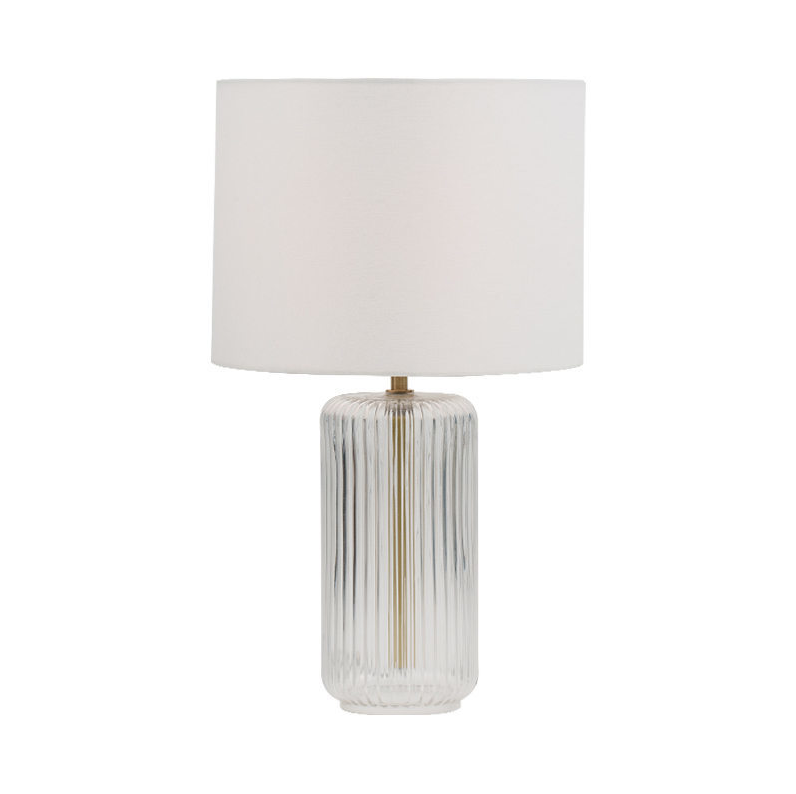
An importer in Rotterdam opens a container of 3,000 bedside lamps and finds 180 cracked glass shades. The bases are fine, the wiring passed inspectio...
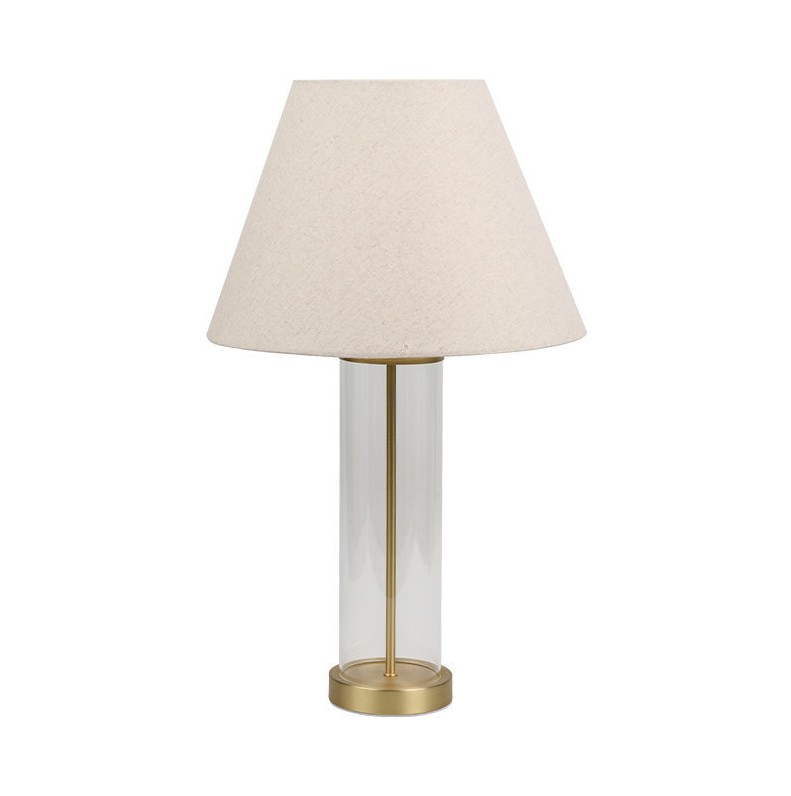
Two containers of the same decorative table lamp leave the same factory, and only the socket label changes: E27 for a German importer, E26 for a US w...

 No.11 Gongji South Road, Linshan Town, Yuyao City, Zhejiang Province, China
Copyright ? Yuyao Baolong Electrical Appliance Co., Ltd. All Rights Reserved. Wholesale Decoration Lamp Manufacturer Decoration Lamp Factory


bla@yybaolong.cn

+86-18868663339
+86-574-62067336