English
  中文简体
中文简体  Français
  Español
Rechargeable Cordless Table Lamps: The Wholesale Guide for Smart Buyers
Why Cordless Table Lamps Rechargeable Models Are Gaining Traction in the Contract Lighting Market A cordless table lamp rechargeable design solves a ...
Content
A cordless table lamp rechargeable design solves a problem every interior project faces: how to place warm, functional light in a corner that has no wall outlet. Hotels, bed-and-breakfasts, restaurants and residential projects have all started specifying rechargeable lamps because they remove extension cords, allow flexible styling, and keep furniture layouts clean. For importers, wholesalers and online retailers, the growing demand for these portable fixtures represents a chance to refresh product assortments without committing to complicated electrical installation.
This article examines the rechargeable table lamp category from the perspective of a professional lighting manufacturer and exporter. We will explain how these lamps are built, what battery specifications actually matter, how to select models for different usage scenarios, and which quality checks a credible supplier should run before shipping a batch. The goal is to give purchasing managers and product developers the technical vocabulary they need to evaluate samples, compare quotations and negotiate specifications with confidence.
Whether you are sourcing for a hospitality project, a retail chain, or a wholesale catalogue, the decisions about battery capacity, LED driver quality and charging interface will determine your return rate and end-user satisfaction. Understanding a few core principles can help you distinguish a well-engineered product from a cheap promotional item that disappoints in the field.
Key takeaway: Cordless table lamps rechargeable models are no longer a niche specialty. They have become a standard SKU for lighting wholesalers who serve hospitality, residential and commercial clients.
Rechargeable table lamps are available in many styles, but functionally they usually fall into four categories. Decorative ambient lamps provide a soft glow for nightsides, shelves and bar tables. Reading-friendly models use an adjustable arm or swivel head and higher brightness to support close work. Emergency and portable lamps emphasize long battery runtime and often include a handle or rugged base. Finally, multi-purpose lamps may add USB output ports, wireless phone charging, or touch dimming to combine lighting with mobile device convenience.
From a material perspective, the housing can be metallic, ceramic, glass, resin or natural materials such as rattan and bamboo. The choice of material affects not only the appearance but also the thermal endurance of the lamp, especially when the LED driver is enclosed. A well-designed metal lamp can dissipate heat effectively, while a sealed ceramic base may need a lower wattage LED to avoid premature battery or driver failure.
The following two product examples show how a factory typically applies the rechargeable concept to decorative table lamps:
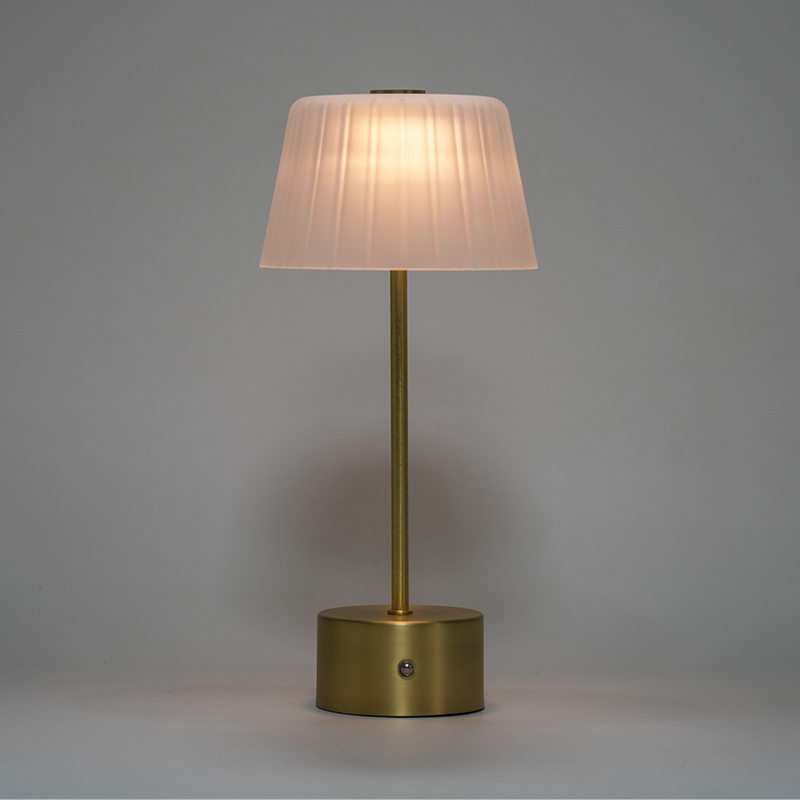 Gold Cone LED Rechargeable Table Lamp with USB ChargingThis rechargeable table lamp combines a sturdy gold metal base with energy-efficient LED lighting, making it suitable for bedside, desk, or living room use while offering a practical cordless option for wholesalers.View Product →
 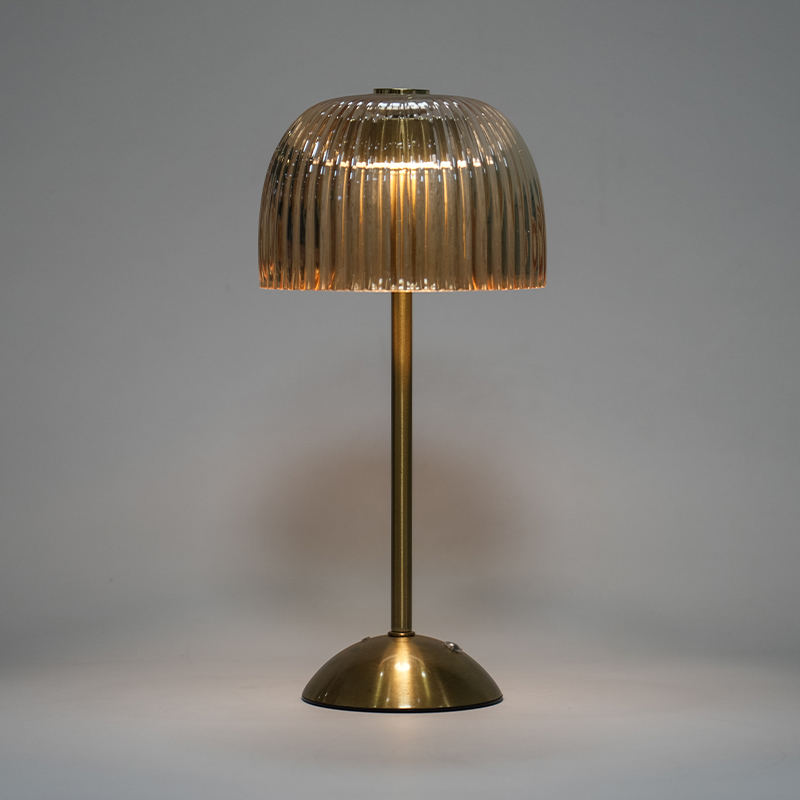 American Retro LED Rechargeable Table Lamp with Golden StripesFeaturing a retro-modern design with a hemispherical cover and slender golden stripes, this rechargeable lamp offers stable round base construction and adjustable lighting, ideal for studies, bedrooms, or living rooms.View Product →
These designs use integrated LED modules, lithium-ion batteries and USB charging ports, while keeping the visual language suitable for a dining room sideboard or a bedroom nightstand. For a wholesaler, offering such styles helps a buyer cover both the decorative segment and the practical cordless segment with a single supplier.
Key takeaway: Match the lamp type to the actual use case. A decorative ambient lamp needs a moderate battery and a warm dimmable glow, while a reading lamp must deliver higher lumen output and a longer runtime.
The anatomy of a cordless table lamp is simple, but every component must be selected with care. The lithium-ion battery pack is the heart of the product. It is usually rated in milliamp-hours (mAh), which directly determines how many hours the lamp can run at a given brightness. A 2000 mAh battery may power a low-wattage decorative LED for 8 to 12 hours, while a 4000 mAh pack is more appropriate for a reading lamp running at full brightness.
The LED module converts electrical energy into light. High-quality LED beads from established manufacturers deliver stable luminosity, consistent color temperature, and high color rendering index (CRI) ratings. Because a rechargeable lamp is often used in intimate settings, color temperature selection matters. Warm white (2700K–3000K) is common for bedrooms and restaurants, while neutral white (3500K–4000K) suits reading desks and kitchens.
The charging system includes a USB socket or USB-C port, a charging management IC, and protection circuits that stop overcharging and over-discharging. USB-C has become a preferred standard because it charges faster, uses a universal cable, and allows a higher input current without overheating. A well-designed charging board also includes temperature monitoring to protect the battery during prolonged plug-in use.
Another critical point is the dimming interface. Many rechargeable lamps use a touch switch or a rotary knob that controls brightness in steps. Continuous dimming is more desirable for manufacturers because it allows users to adjust the lamp from a nightlight mode to a task-bright level. This feature also increases runtime at lower settings, so a lamp with a modest battery can still feel flexible in real usage.
Key takeaway: To evaluate an offer, check the complete chain: battery capacity, LED quality, charging IC, and dimming circuit. The cheapest combination often sacrifices battery protection or CRI, leading to poor field performance.
Rechargeable table lamps shine in spaces where running a power cord is disruptive, unsafe or visually unappealing. In a hotel room, a cordless bedside lamp can rest on a floating shelf or a tray without any wire tangling. A café can move lamps between tables to change the mood on a terrace. A living room sideboard can display a pair of rechargeable lamps that turn on and off with a simple touch, adding sophistication without hiring an electrician.
For commercial buyers, the ideal product specification depends heavily on the environment. A lamp in a restaurant may be repositioned several times every evening, so its mechanical joints and battery pack must endure frequent movement. A hotel nightstand lamp remains stationary but must survive multiple touch operations per day. A reading lamp attached to a headboard should provide a focused beam while keeping the battery small enough to stay stylish.
The chart below compares recommended battery capacities for different application scenarios based on typical daily usage hours. These values serve as a practical frame of reference when you brief a supplier or compare product specifications.
Before designing the product line, a buyer should estimate how many hours each lamp will switch on per day and what brightness level is necessary. A decorative lamp running for 8 hours at 10% output needs a much smaller battery than a task lamp running for 4 hours at 100% output. Furthermore, the ambient temperature in the room affects battery performance; cold drafts can reduce lithium-based capacity temporarily. Finally, end users often forget to turn lamps off, so a low-brightness automatic shutoff timer is a useful safety feature.
| Application Scenario | Recommended Battery Capacity (mAh) |
|---|---|
| Hotel Bedroom Nightstand | |
| Restaurant / Café Table | |
| Home Bedside Decorative Lamp | |
| Reading / Study Desk | |
| Emergency / Power-Cut Use | |
| Outdoor Terrace / Patio |
The horizontal bar chart above makes it easier to see how the required battery size changes from one environment to another. Hotel room lamps generally need around 3500 mAh because they are used for a few hours at night and then charged during the day. Restaurant tables often demand a higher capacity because the lamp may stay on from early evening until closing time, and there is no opportunity to recharge between seatings. Home bedside decorative lamps can work with 3000 mAh because the brightness is intentionally low and most users switch the lamp off before sleeping. Reading and study lamps should be given more headroom, since a focused beam at 300 to 500 lumens draws more current, and a 4500 mAh battery is safer to meet the expected runtime. Emergency lamps should prioritize maximum runtime, so a 5000 mAh cell or even a dual-cell design becomes appropriate.
In outdoor settings, weatherproofing and battery self-discharge rate become more important than raw capacity. A patio lamp may be exposed to humidity, so its battery enclosure must prevent moisture ingress and the charging port should have a rubber cover. Because Li-ion batteries naturally lose a small percentage of charge while idle, a lamp used occasionally in a holiday home should still hold a useful charge for several weeks.
When a buyer specifies capacity, it is wise to ask the factory which battery cell brand and cycle life are used. A premium cell might retain 80% of its original capacity after 500 charge cycles, while a low-grade cell could degrade in half that time. These differences are not visible in the initial sample but will be noticed by end customers within the first year of use.
From a cost perspective, increasing battery capacity by 1000 mAh can add roughly 10% to 15% to the component cost of the lamp. Therefore, specifying an oversized battery for every lamp in a range may reduce your margin unnecessarily. A segmented approach, where small-capacity models target decorative use and high-capacity models target task and emergency use, gives your catalogue more commercial flexibility.
Finally, remember that the charging time should be proportionate to the battery size. A 3500 mAh cell with a 1A USB charger takes around 4 hours; a 5000 mAh battery with the same input needs nearly 6 hours. For commercial users, faster charging is a meaningful advantage because lamps can be recharged during off-peak hours without keeping them out of service for too long.
Key takeaway: Battery selection is not a one-size-fits-all decision. Use scenario-specific capacity recommendations to avoid both underperformance and unnecessary material cost.
When reviewing quotes from different suppliers, you need a common basis for comparison. Many factories will list the most attractive features, such as “rechargeable, touch dimming, USB-C” but omit the actual battery test results or CRI value. The table below shows a typical tiered breakdown that a buyer can use to classify product offers.
| Specification | Economy | Standard | Premium |
|---|---|---|---|
| Battery capacity | 1200–1800 mAh | 2000–4000 mAh | 4000–6000 mAh |
| Typical runtime at full brightness | 2–4 hours | 4–8 hours | 8–16 hours |
| Charging interface | Micro USB | USB-C | USB-C with fast charge |
| Color rendering index (CRI) | >70 | >80 | >90 |
| Color temperature range | Fixed 3000K or 6500K | 3000K–5000K (fixed options) | 2700K–6000K (adjustable) |
| Dimming steps | 2 steps | 3 steps | Continuous / stepless |
| Battery protection | Basic overcharge | Overcharge + over-discharge | Temperature + short-circuit + over-discharge |
The most common sourcing mistake is paying attention only to the retail brightness or the style of the lamp while ignoring the battery protection circuit. A low-cost controller may simply stop charging when the cell reaches 4.2V but fail to disconnect on low voltage. That can permanently damage the battery if the user leaves the lamp running until it empty. Several importers have learned this lesson when a batch of lamps suddenly failed after two months because the over-discharge circuit was missing.
Another often overlooked parameter is the actual lumen output per watt. Two lamps with identical battery capacity can have very different runtimes if one uses an inefficient LED driver. Check the system efficiency, not just the LED chip brand. A driver that converts 90% of battery energy into light instead of 80% will extend the runtime by more than 10% without any cost increase.
For lighting that will be used in bedrooms and hospitality environments, the color rendering index (CRI) is especially important. Lights with a low CRI can make wooden furniture and skin tones look dull or even greenish. A CRI of 80 is acceptable in many commercial projects, but a CRI of 90 or above is becoming a requirement for upper-tier hotels and upscale restaurants. Evaluate this at the sample stage with a CRI meter rather than assuming the spec sheet is accurate.
Mechanical durability also matters. A rechargeable lamp is picked up and moved more often than a fixed lamp, so the joint between the lampshade and the stem should be reinforced. Ask the supplier about the drop test height and the number of cycles for any swivel or rotating parts. Likewise, the paint finish on metal surfaces must resist scratching during normal handling. These small engineering decisions determine whether your product earns repeat orders or generates warranty returns.
Key takeaway: Use a tiered specification table to align your purchasing priorities. For a mid-market assortment, aim for at least 2000 mAh battery, USB-C charging, CRI>80, and a 3-step dimming function.
Because cordless lamps contain lithium-ion batteries, they are subject to stricter safety scrutiny than ordinary decorative lamps. Most European and North American buyers now require CE, RoHS and ERP certificates, but additional battery transport documentation is necessary for air and sea freight. The UN38.3 test series is the standard abbreviation for mechanical and electrical safety tests required for lithium cells. A reliable lamp manufacturer will either have those test reports or source cells from a partner that does.
The production process for a rechargeable table lamp involves several inspection gates. First, the incoming battery cells must be checked for capacity consistency and internal resistance mismatch. Cells that are paired incorrectly can lead to uneven discharge and premature failure. Second, the LED modules are tested for color temperature and brightness tolerance before assembly. Third, the completed lamp undergoes a burn-in test, usually for 4 to 8 hours, to identify early failures in the driver circuit. Finally, a random sample from each batch is subjected to a drop test and a charging-cycle test.
Visitors to a factory should look for equipment such as an integrating sphere for measuring luminous flux, an anti-static workbench for circuit board assembly, and a battery cycle tester. The presence of these tools indicates that the manufacturer treats rechargeable lighting as a serious engineering discipline rather than assembling components randomly. The factory site should also demonstrate a dust-controlled area for battery handling because metallic debris can cause internal short circuits.
Certification documents should be matched to the exact model number of the lamp you are about to order. A general CE certificate for the factory does not cover a new product with a different battery pack configuration. Ask for the EU Declaration of Conformity that references the specific model name and the relevant directives. If the buyer plans to sell in the UK, UKCA documentation may also be required in certain cases.
In terms of product maintenance, end users should be told not to replace the built-in battery by themselves unless the lamp is designed with a serviceable battery compartment. Some premium models offer a replaceable 18650 battery that extends the life of the lamp, making it a strong selling point for B2B buyers who worry about electronic waste. If the battery is sealed, the supplier should provide a durability test report showing the expected cycle life.
Key takeaway: Never ship rechargeable lamps without checking battery certification and transport documentation. A compliant battery system may cost a little more, but it protects your customers and your brand from regulatory and safety incidents.
The best product specification is only as good as the factory that turns it into reality. When you evaluate a lighting manufacturer for a rechargeable lamp project, first assess their experience with similar battery-powered products. A firm that has produced decorative LED table lamps for years but only recently added rechargeable models may need more support from you in terms of battery supplier selection. On the other hand, a manufacturer with established battery-powered lines can usually solve charging and safety issues quickly.
Ask for a complete catalog of their rechargeable products and compare the internal battery placements. Good industrial design ensures that the battery does not make the lamp bottom-heavy in a dangerous way, nor so light that it tips over when the lampshade is tilted. The sample should also be stable when the user touches the switch to adjust brightness.
Communication speed is another indicator of reliability. A factory that provides detailed answers on voltage, current, charging time, and battery cycle life is more likely to have a technical department rather than only a sales team. You may also request a video call to see the production line and the testing equipment in operation. If the supplier cannot show a dedicated battery storage area, treat that as a red flag for quality control.
From a customization perspective, many importers want to change the lamp shade fabric, the finish, or the logo. Check whether the factory offers OEM/ODM support with reasonable minimum quantities. Also verify if the factory can adjust the battery capacity without redesigning the housing. Minor changes such as increasing the mAh or switching from 3-step dimming to continuous dimming may only require a different driver board, while major changes like a new housing require mold investment.
Once you have shortlisted one or two suppliers, order pre-production samples and test them in your own setting. Charge each sample fully, run it at maximum brightness, and measure the actual runtime. Compare the measured results with the data sheet. Also test the charging cable that is included in the carton: a poor-quality cable can limit the charging current and frustrate users. If possible, run a 7-day controlled test that simulates a full cycle per day so you can spot any premature battery degradation.
A professional supplier should also offer support with shipping labels, carton design, and user manuals. For a rechargeable lamp, the manual must include the battery type, charging instructions, disposal notes, and safety warnings. Some suppliers can provide the manual in multiple languages, which is a plus for exporters serving several markets. Finally, consider visiting an international lighting trade fair and meeting the factory team face-to-face; a personal relationship still makes a significant difference in resolving quality issues and negotiation deadlocks.
When you need to browse the complete assortment or want to compare different executions of the same desk lamp style, check the factory’s product series page. A detailed display of lamp families helps you identify which models already have rechargeable features and which can be easily adapted. From a portfolio perspective, a broad selection allows you to choose complementary designs rather than cannibalizing the same style in your catalogue.
If you are developing a range for the wholesale market, consider offering a few streamlined configurations instead of many custom variants. This reduces inventory pressure and simplifies the factory’s QC process. You can still use packaging and finishing details to create different price tiers. In this way, you maximize the manufacturing value while maintaining a focused product line.
To further verify the factory’s export experience, ask for the shipping marks used for Australian, European or US customers. A strong export record usually correlates with a better understanding of packaging strength, palletization, and documentation requirements. Also check whether the supplier can handle mixed pallets of table lamps and floor lamps or if they prefer full-container orders for each model.
Ultimately, the right supplier is not necessarily the one with the lowest piece price, but the one that gives you confidence that every lamp in every batch will perform as expected. A short delay in production is easier to fix than a battery field failure that triggers recall. Invest time in the factory audit and the sampling process, because those steps protect your margin and reputation.
Key takeaway: Base your supplier selection on tested samples, clear OEM/ODM communication, and visible battery quality control. The extra effort before ordering prevents much larger problems after shipping.
Most lithium-ion batteries used in decorative lamps are rated for 300 to 500 full charge cycles. If the lamp is charged once every two days, this corresponds to roughly 2 to 3 years of regular use. After that period, the battery still holds a reduced charge, but the runtime may drop to 50% or less. Lamps with replaceable 18650 cells allow users to install a new battery and extend the life of the lamp body.
The runtime is determined by the battery capacity, the LED power, and the dimmer level. A typical 3000 mAh lamp can run 6 to 10 hours on a low setting and 4 to 6 hours at medium brightness. At maximum brightness, the runtime may be as short as 3 hours. When you buy for a hotel or restaurant, always request the runtime test at the level your clients will actually use.
Modern lamps with a proper charging management IC will stop delivering current when the battery is full, so leaving them plugged in is generally safe. However, prolonged connection to a poor-quality charger can cause slight overheating. We recommend using the original USB cable and not exceeding the input current specified by the factory. If a lamp is intended to be used primarily while plugged in, tell the supplier so they can adjust the driver design for continuous AC use.
Yes, with the right specification. Look for a lamp that delivers at least 300 lumens at the highest setting and has a CRI of 80 or higher. A dimmable feature allows the user to shift between a broad ambient light and a focused reading beam. The lampshade shape also affects optical distribution; a directional shade is better for task lighting while an open or fabric shade is better for ambient comfort.
For the European market, CE and RoHS are the baseline; ERP applies to energy-related products. For the UK, UKCA is often required. For air and sea transport of lithium batteries, UN38.3 test reports and the accompanying MSDS documents are mandatory. If the lamp includes a wireless charging function, additional radio equipment testing may be required. Always ask the factory for model-specific certificates rather than generic company certificates.
Key takeaway: When in doubt, ask for the battery cycle test report, runtime test data, and the model-specific CE/RoHS/UN38.3 documentation. These documents confirm that the supplier can legally and reliably deliver rechargeable lamps to your markets.
The rechargeable table lamp market is expanding because it gives customers a simple way to decorate spaces without wiring. For wholesalers and importers, this success also brings more competitors and more variance in quality. The brands that win are those that control the key technical parameters, work with a factory that genuinely understands battery safety, and create a product portfolio that matches real usage patterns.
Before finalizing your purchase order, review the application scenarios you want to cover. Choose battery capacities that align with the expected runtime. Insist on USB-C charging whenever possible, since it extends the useful life of the product and reduces consumer frustration. Confirm that the color temperature and CRI are suitable for the target environment. Finally, maintain a close relationship with the factory and keep your own test results as a benchmark for every shipment.
If you are ready to explore a factory-built range of decorative and functional rechargeable lamps, ask your manufacturer for samples that match the specification levels described in this guide. A dependable supplier will welcome your technical questions and provide transparent data. That kind of partnership is far more valuable than chasing the lowest initial price on a commodity item.
Key takeaway: Successful sourcing of cordless table lamps rechargeable depends on selecting the right battery and the right factory. A small investment in testing and certification pays off through fewer returns, stronger customer loyalty, and cleaner product launches.
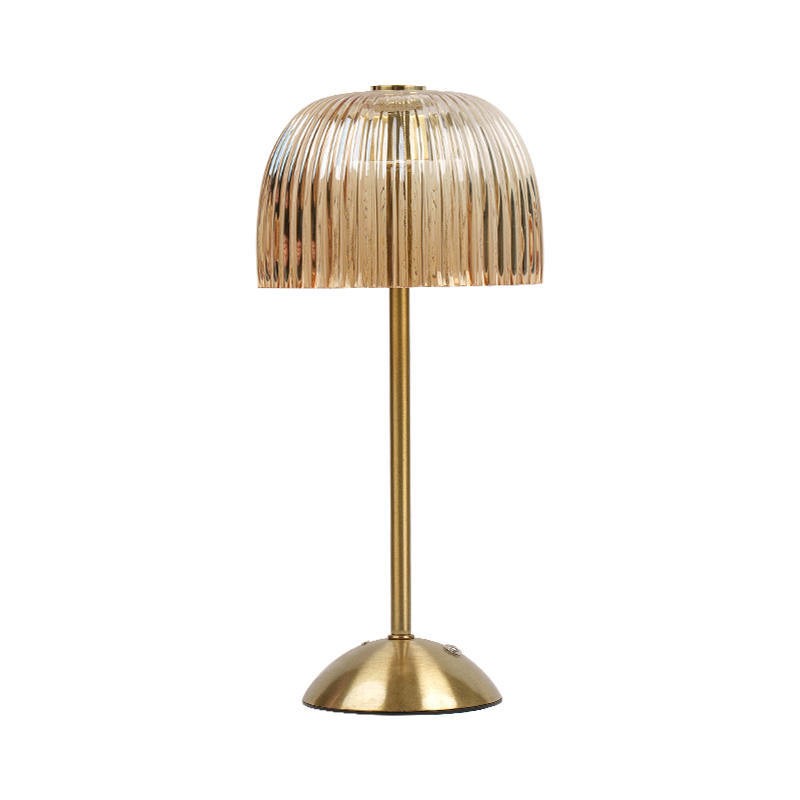
Why Cordless Table Lamps Rechargeable Models Are Gaining Traction in the Contract Lighting Market A cordless table lamp rechargeable design solves a ...
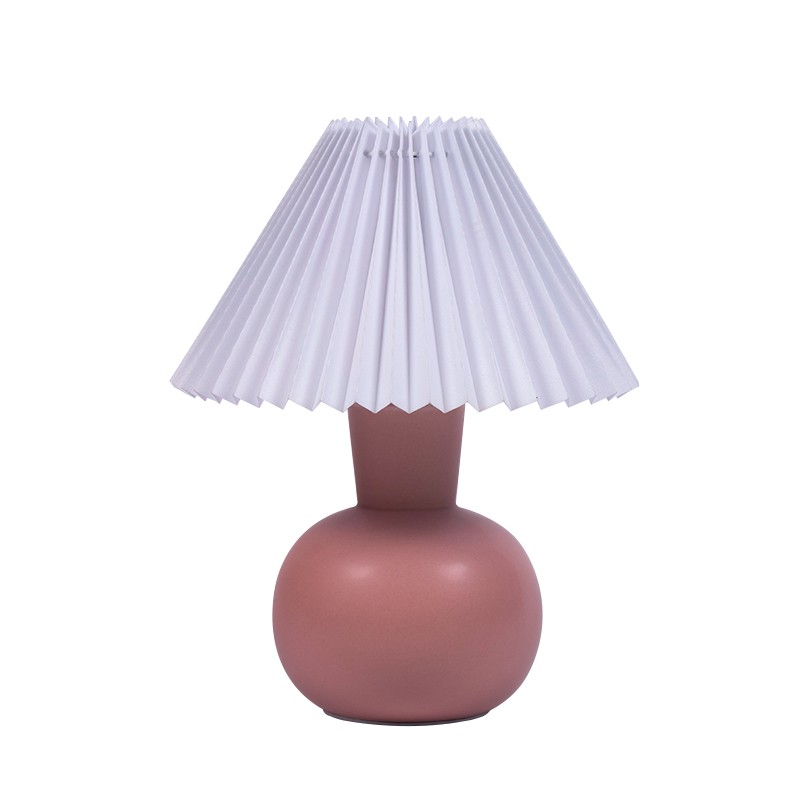
Every buyer who has sourced decorative lighting has met the same mismatch: the catalogue drawing looks right, the finish is approved, and then the sh...
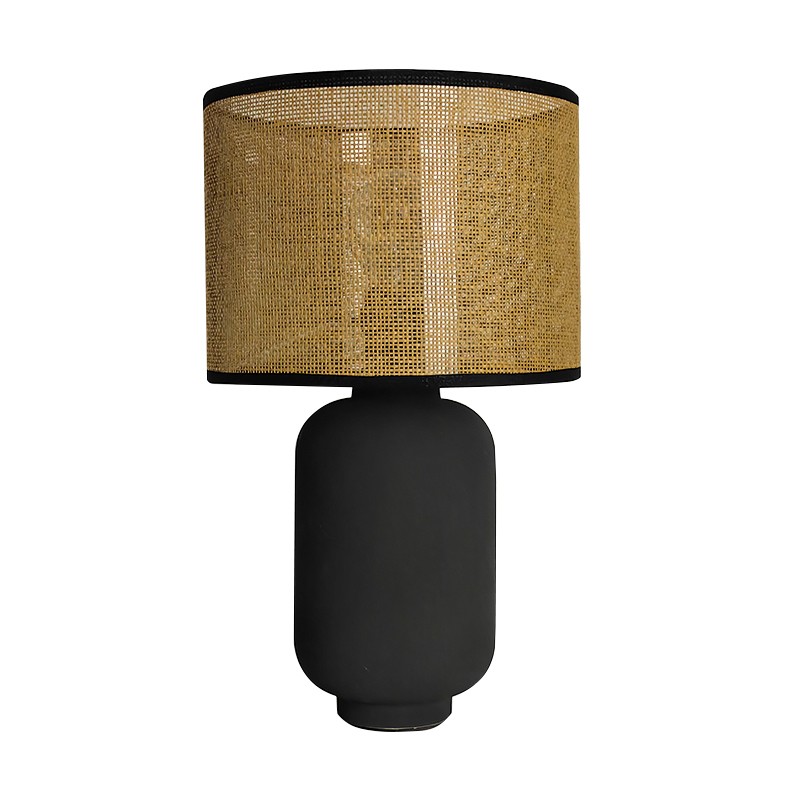
A common complaint that reaches a lamp manufacturer's inbox reads like this: the sample arrived, the ceramic base looked right, but the shade swallow...
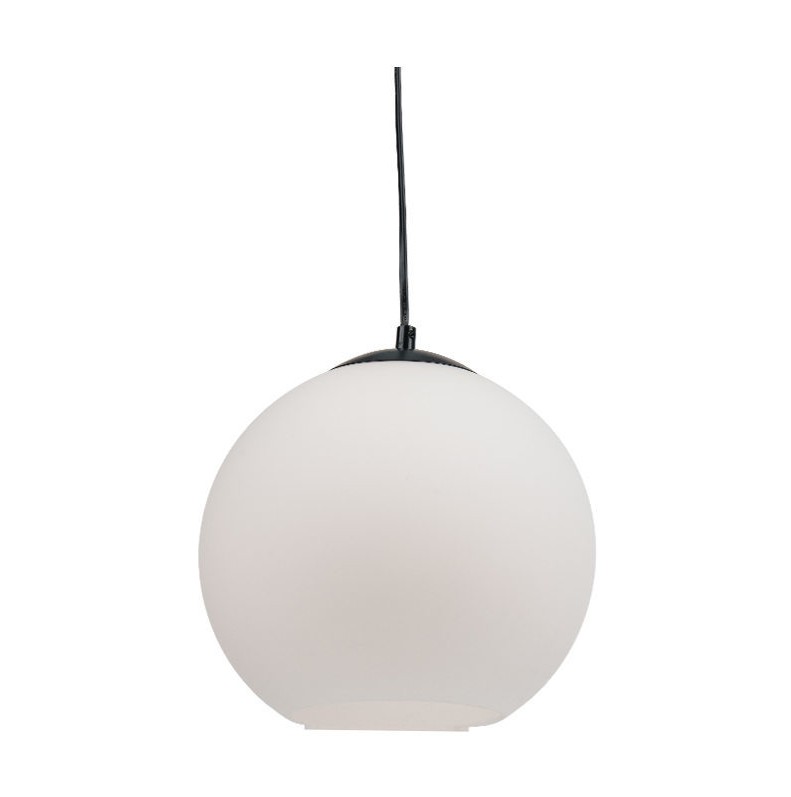
Decoration Pendant Lamp Basics: Direct Answer and Quick Overview A decoration pendant lamp is a ceiling-suspended lighting fixture that hangs from a ...

 No.11 Gongji South Road, Linshan Town, Yuyao City, Zhejiang Province, China
Copyright ? Yuyao Baolong Electrical Appliance Co., Ltd. All Rights Reserved. Wholesale Decoration Lamp Manufacturer Decoration Lamp Factory


bla@yybaolong.cn

+86-18868663339
+86-574-62067336