English
 中文简体
 Français
 Español

Types of Lampshades: A Practical Guide to Shapes, Materials, Fitters and Sourcing
A 20 mm change in shade diameter can cost an importer more than the shade itself. On a typical 3,000-piece bedside lamp program, moving from a 280 mm...
A 20 mm change in shade diameter can cost an importer more than the shade itself. On a typical 3,000-piece bedside lamp program, moving from a 280 mm drum to a 300 mm empire widens the carton, cuts the container load by several percent, and adds enough cost per unit to matter at the negotiating table. The shape looked better in the showroom; the freight bill paid for it.
That is the practical reality behind types of lampshades. The category is usually discussed as a styling question, but in commercial lighting it is a specification question: which silhouette, which material, which fitter, and which market rules the finished lamp has to pass. A shade that ignores the fitter ring cannot be assembled. A shade that ignores bulb heat fails a safety test. A shade that ignores carton geometry quietly erodes margin on every shipment.
The short version is that five or six core shade families, a handful of material options and three or four fitter types cover the vast majority of residential and hospitality orders. Everything else is a variation on those basics. The sections below break down shapes, materials, fitters, light transmission, sizing rules, decorative finishes, heat and compliance, and the tolerances worth writing into a purchase order, so a specification can be agreed once and quoted consistently by every supplier in the chain.
Shade type is decided first by fitter hardware and bulb clearance, then by silhouette and material, and only then by style trend.
Content
There are three ways to sort lampshades, and mixing them up is where catalogs and purchase orders go wrong. The first is by silhouette, meaning the geometry of the frame: drum, empire, bell, coolie, square, oval, hexagon, and the shaped-edge families. The second is by material, meaning what the light passes through: fabric, paper, metal, glass, natural fibre, or composite. The third is by fitter, meaning how the shade attaches to the lamp: spider and harp, uno, clip-on, duplex, or gallery.
A shade is only fully specified when all three are named. "White fabric shade" tells a factory almost nothing. "Hardback drum shade, 350 mm bottom, 300 mm top, 220 mm height, unlined linen in off-white, spider fitter for an 8 inch harp, E27 socket, max 9 W LED" tells a factory everything, and the quotation that comes back will be comparable to the next supplier's.
| Type | Outline | Light behaviour | Usually paired with | Watch out for |
|---|---|---|---|---|
| Drum | Straight cylinder, equal top and bottom diameter | Even wash upward and downward, soft sides | Table lamps, floor lamps, pendants | Top opening too small creates a hot spot and trapped heat |
| Empire | Tapered cone, narrower at the top | Directs light down and outward | Bedside, buffet, hotel desk lamps | Taper ratio beyond 1:3 looks unstable and shades the bulb poorly |
| Bell | Curved taper with a flared skirt | Softens downlight, warmer pool of light | Traditional ceramic and wood bases | The curve can hide the harp and complicate assembly |
| Coolie or cone | Shallow, wide flare like a straw hat | Strong downlight, very little side light | Chandeliers, small accent lamps | Visible glare when hung near eye level |
| Square and rectangular | Four flat panels, stitched corners | Directional, matches angular furniture | Console, desk and hotel room lamps | Corner stitching must be straight or the shade looks twisted |
| Oval | Stretched drum with an elliptical section | Wide, low spread of light | Sideboards, long consoles | Harder to pack without creasing the long panels |
| Hexagon and cut-corner | Faceted drum, six or eight panels | Breaks up the light into soft facets | Transitional and boutique interiors | Panel alignment and seam tension |
| Gallery and scalloped | Shaped or cut bottom edge | Decorative shadow play along the rim | Period, hospitality and feature lamps | Cheap die cutting leaves wavy, uneven edges |
Two naming habits cause trouble across markets. In the United States, "empire" often covers anything tapered, including shapes a European factory would call a bell. In Australia and the United Kingdom, "gallery" can mean the metal ring that holds a shade rather than the shape of the shade itself. When a specification crosses borders, describe the geometry with numbers instead of relying on the trade name alone.
Always specify a shade by silhouette plus dimensions plus fitter; the trade name alone is not a specification.
The drum is the workhorse of the category and the easiest shape to buy well. Two rings of equal diameter are joined by a straight panel, usually with one vertical seam at the back. Standard sizes in export programs run from about 200 mm to 500 mm in diameter, with heights between 150 mm and 300 mm. Because the top and bottom are identical, the drum throws light up toward the ceiling and down onto the surface at the same time, which makes it forgiving in rooms with dark walls or no ceiling fixture.
The detail that separates a good drum from a cheap one is the top opening. If the top diameter is smaller than roughly 45 percent of the bottom, airflow is restricted, heat builds under the crown, and fabric yellows unevenly above the socket. Keep the top opening generous and the drum will stay cool even with a 12 W LED lamp running for hours.
Empire shades taper from a wide bottom to a narrower top, typically in a ratio between 1:2 and 1:3. That taper does two useful things: it hides the harp and socket from a seated viewer, and it pushes the light cone downward, which is why empire shapes dominate bedside and hotel desk lighting. Go beyond a 1:3 ratio and the shade starts to look like a funnel; the bulb sits deep inside and the top edge glows unevenly.
Bell shades are the curved cousins of the empire. The profile flares outward near the bottom instead of running straight, which softens the edge of the light pool and suits ceramic, brass and turned-wood bases. In production the curve costs more because the panel must be blocked or pressed rather than simply rolled, so a bell usually carries a small premium over a straight empire of the same size.
The coolie, named for the conical straw hat, is shallow and wide with a pronounced flare. It is a chandelier and pendant shape rather than a table lamp shape, because almost all of its output is directed downward. That makes it efficient over a dining table and uncomfortable at eye level in a hallway. On multi-arm chandeliers the small coolie is often a clip-on fitting, which means the clip must be rated for the heat of the bulb directly beneath it.
Four-panel shades exist to answer angular bases. A square base with a round shade looks unresolved, and a round base with a square shade looks like a mistake, so the pairing rule is simple: match the geometry of the base. Rectangular shades are common on console and buffet lamps where the footprint is long and narrow.
The production challenge is the corner. A proper corner is stitched, folded and trimmed so the panel edge stays crisp; a rushed corner puckers or leans, and because the eye reads vertical lines instantly, one bad corner condemns the whole shade. Cut-corner shades soften the effect by replacing each corner with a short diagonal panel, giving eight faces and a calmer transition.
Oval shades are drums stretched along one axis. They suit long sideboards and narrow console tables where a round shade would look undersized from the front and oversized from the side. Hexagon and faceted shades divide the surface into panels, which breaks the light into gentle vertical bands and reads as transitional rather than strictly modern or strictly traditional. Both families cost more to cut and sew, and both are harder to pack, so they usually appear in feature ranges rather than volume programs.
Shaped edges are the decorative end of the silhouette spectrum. Scalloped, wave, notched and gallery-style bottoms add movement along the rim and cast a patterned shadow line on the wall behind the lamp. The quality marker is the die cut: on a well-made shade the scallops are identical in depth and the trim follows the curve without ripples, while on a cheap one the edge waves visibly when the shade is rotated.
Wall lights and sconces use a shade cut in half and mounted against the wall, so light washes upward and downward and nothing is wasted against the plaster. These are specified by projection depth as well as height, and they must be checked against the backplate size, because a half shade that overlaps the backplate cannot sit flush.
Silhouette is a lighting decision before it is a styling decision; the taper and the top opening control where the light goes and how hot the shade runs.
Material decides two things that generate returns: how much light reaches the room, and how easy the shade is to keep clean. A lined fabric shade in a hotel corridor is a maintenance decision as much as a design decision, and an unlined linen drum in a bright bedroom is a glare decision. The card row below summarizes the six families most often quoted in export programs.
Linen, cotton and blends. The default for residential and hotel lamps; lined or unlined changes transmission sharply.
Warm, diffuse, inexpensive. Best with LED; needs dry rooms and careful packing.
Spun, perforated or cage form. Opaque shades read as industrial and concentrate light downward.
Opal, cream, ribbed or clear. Full diffusion and easy cleaning, but heavier and costlier to ship.
Rattan, bamboo, paper rope and seagrass. Strong resort and boutique signal, sensitive to humidity.
Moulded shapes at low tooling cost. Useful for novelty ranges and children's lighting.
An unlined linen or cotton shade passes roughly 55 to 65 percent of the light through the panel, which produces a bright, slightly uneven glow with the bulb shape faintly visible. A lined shade, using a polystyrene or PVC inner layer, drops transmission to around 30 to 40 percent and hides the bulb entirely. For hospitality bedrooms, the lined version is almost always the better commercial choice: no visible hot spot, no glare for a guest lying in bed, and no complaints about seeing the bulb.
Fabric weight matters too. A 180 to 220 gsm linen holds a crisp shape and resists sagging; a lightweight 120 gsm fabric is cheaper but bends at the top ring over time, especially in warm rooms. When a supplier quotes a fabric shade, ask for the weight and the lining type in writing.
Pleating multiplies surface area, which softens the output further and gives the shade a classic, dressed appearance. A knife-pleated empire shade typically transmits 40 to 55 percent of the light and throws a very even wash with no visible bulb. The manufacturing cost sits in the pleat setting: pleats must be pressed and heat-set so they survive packing and a humid container, otherwise the shade arrives looking flat on one side.
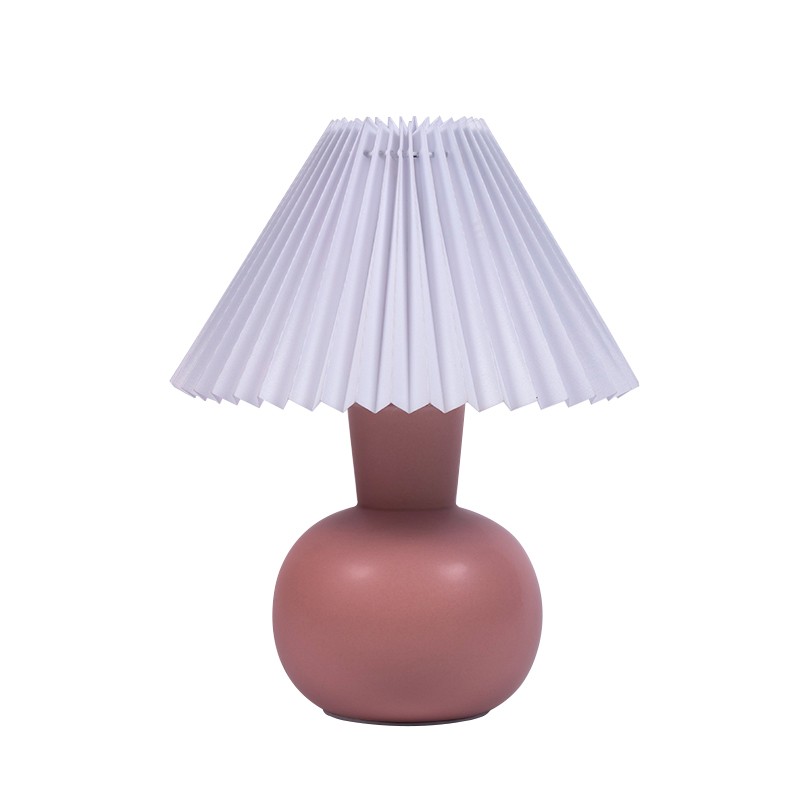
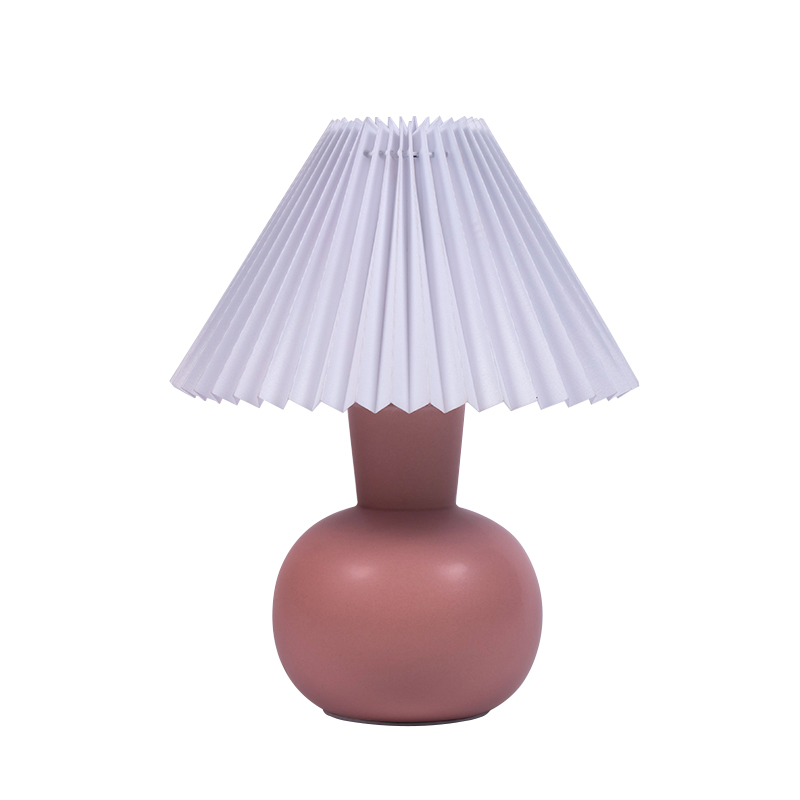 Pleated Lampshade Ceramic Bedside Table LampWhite pleated cone shade diffuses light softly over a dark brown ceramic-like base, suited to bedside ambient lighting; OEM/ODM inquiry available.View Product →
Paper shades are the lowest-cost way to get a soft, warm glow, and they photograph extremely well. The trade-offs are durability and heat. Paper scorches and discolours above roughly 40 W of incandescent heat held close to the surface, so paper shades should be specified with LED only, with a clear maximum wattage printed on the label. Parchment and synthetic rice paper handle humidity better than true paper and are the safer choice for coastal projects.
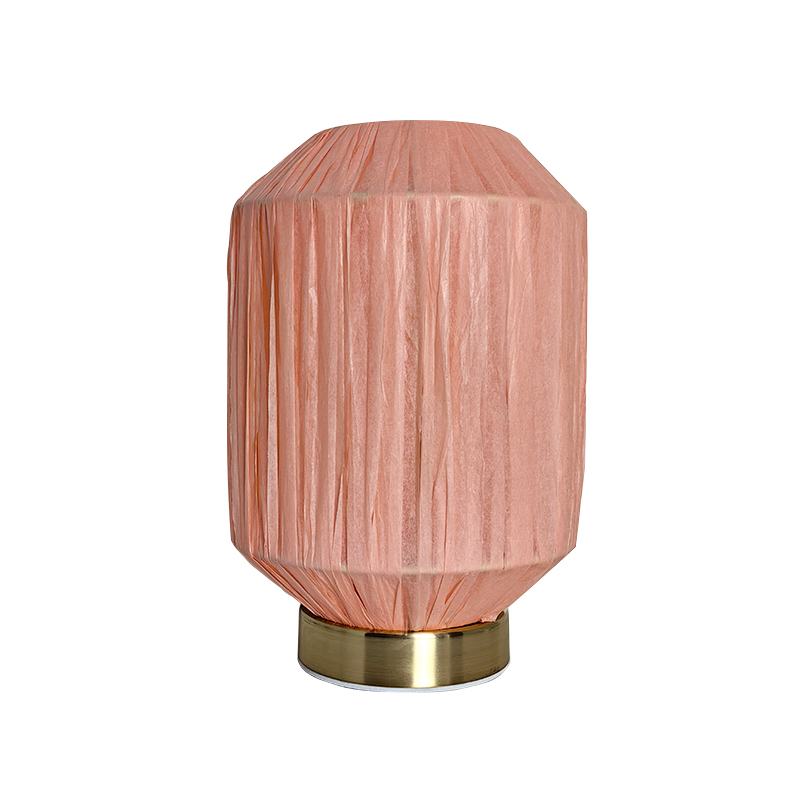 Paper Woven Lampshade Table Lamp with Metal BaseWood-grain paper woven shade diffuses light softly and reduces glare, paired with a stable metal base for table lighting; OEM/ODM orders offered.View Product →
A solid metal shade is directional by definition. It blocks the sides and drives light down through the bottom opening, which is ideal over a dining table or a reading chair and wrong for a bedside table where the sitter wants ambient light. Perforated and cage designs sit in between: the holes punch a pattern of light onto the wall and give 15 to 25 percent side transmission without the glare of an open bulb.
Opal and cream glass diffuse almost as evenly as a lined fabric while staying easy to wipe clean, which is why glass shades dominate bathroom and corridor fixtures. The cost penalty is weight: glass shades need more padding, thicker cartons and sometimes individual foam cradles, and the freight per cubic metre climbs accordingly. Ribbed and seedy glass are stylistic variations that scatter light without changing the underlying transmission much.
Woven natural materials are the strongest differentiator in resort, homestay and boutique hotel projects. Rattan, bamboo, seagrass and paper rope all read as handcrafted and warm, and they filter light through thousands of small gaps rather than a continuous panel. The risk is moisture: natural fibre can swell, warp or grow mould in an unvented coastal room, so specify a sealed finish and avoid shipping these shades in humid conditions without desiccant.
Moulded resin gives smooth, complex shapes at low tooling cost and works well for novelty, children's and themed ranges. It is heavier than fabric, lighter than glass, and the surface can be finished to imitate ceramic, stone or metal. Impact resistance is the weak point; specify a flexible resin and a wall thickness above 2.5 mm if the shade is likely to be handled in retail.
| Material | Light through panel (approx.) | Cleaning method | Relative unit cost | Typical use |
|---|---|---|---|---|
| Unlined linen or cotton | 55 to 65 percent | Vacuum with brush attachment | Medium | Living rooms, bedrooms |
| Lined fabric | 30 to 40 percent | Lint roller, dry cloth | Medium | Hotel bedside, corridor |
| Pleated fabric | 40 to 55 percent | Soft brush, low suction | Medium to high | Classic and transitional interiors |
| Paper and parchment | 50 to 60 percent | Dry cloth only, no water | Low | Accent lamps, LED only |
| Opal or cream glass | 60 to 70 percent | Damp cloth, mild soap | High | Bathrooms, hospitality |
| Perforated metal | 15 to 25 percent | Damp cloth | Medium | Industrial, retail, restaurant |
| Natural fibre | 30 to 50 percent | Dry brush, avoid damp cloth | Medium | Resort, homestay, B&B |
| Moulded resin | 20 to 40 percent | Damp cloth | Low to medium | Novelty, children's rooms |
Specify material together with lining and bulb type; a fabric name alone leaves light output and heat safety undefined.
Half of all shade complaints trace back to the fitter rather than the fabric. The fitter is the mechanism that joins shade to lamp, and it sets the height of the bulb inside the shade, the stability of the assembly and the number of parts in the carton. Get it wrong and a perfectly good shade will sit crooked, too high, or not at all.
The spider fitter is a three or four-arm frame welded inside the top ring; the arms rest on a harp, and a finial screws down through the centre to lock everything in place. It is the most common arrangement in European, North American and Australian table lamps because it allows the shade to be swapped without tools. The harp height determines where the bulb sits: an 8 inch harp places the bulb roughly at mid-height in a 220 mm shade, which is where you want it.
The uno fitter threads directly onto the socket collar, so no harp is needed and the overall profile is shorter. It is popular for compact bedside and hotel lamps where the shade sits close to the base. The duplex or Euro fitter clamps the shade between two rings, one above and one below, giving the most rigid mounting for large drums but adding assembly time on the line.
Clip-on shades attach directly to the bulb, usually candelabra or small Edison screw types on chandeliers and multi-arm fixtures. The clip must be rated for the heat of the bulb it grips; a cheap plastic-coated clip on a hot incandescent lamp will discolour and lose tension within months. For chandelier programs, specify metal clips and cap the bulb wattage on the label.
Gallery fittings hold a glass or metal shade in a metal ring, often with three thumbscrews. They appear on traditional and reproduction lamps and on UK and Australian bayonet-socket models. The ring internal diameter is the critical dimension, and it varies by a millimetre or two between suppliers, so quote it explicitly rather than assuming a standard.
| Fitter | How it attaches | Common socket | Typical use | Practical note |
|---|---|---|---|---|
| Spider with harp | Arms rest on harp, finial on top | E26, E27, E14, B22 | Table and floor lamps | Harp height sets bulb position; most serviceable |
| Uno | Ring threads onto socket collar | E26, E27 | Compact bedside, hotel lamps | Shorter profile, fewer parts to lose |
| Duplex or Euro | Two rings clamp top and bottom | E14, E27 | Large drums, floor lamps | Most rigid, adds assembly time |
| Clip-on | Clips grip the bulb | E12, E14 | Chandeliers, small shades | Must be heat rated; cap bulb wattage |
| Gallery ring | Ring with thumbscrews holds shade | B22, E27 | Traditional and reproduction lamps | Quote ring internal diameter exactly |
For OEM and ODM programs, the fitter is also a packaging decision. A spider and harp assembly can ship with the harp detached and clipped inside the carton, saving height; a duplex assembly usually cannot. That difference of 30 to 40 mm in carton height translates directly into containers per shipment.
Name the fitter, the socket and the harp height in every shade specification; these three details prevent most assembly and return problems.
Light transmission is the least discussed and most consequential variable in shade selection. Two shades of identical size and colour can differ by a factor of three in how much light reaches the room, simply because one is lined and one is not. Buyers who specify by appearance alone often discover the gap only after the first container lands and the customer reports that the lamp is "too dim" or "too glaring". The chart below is built from typical commercial materials rather than laboratory photometry, so treat it as a specification starting point and confirm final values with an integrating sphere test on the production sample. The pattern it shows is consistent across markets: glass and unlined fabric sit at the bright end, lined fabric in the middle, and metal at the dark end where output is redirected rather than blocked. Reading it alongside the material table above makes it possible to reach a target brightness without changing the bulb.
Approximate share of bulb output leaving the shade, based on typical commercial materials.
The first thing the chart makes obvious is how wide the spread is between the brightest and darkest options. Clear glass releases around nine times more light than a solid metal shade, and roughly two and a half times more than a lined fabric drum of the same size. That is why swapping a material without adjusting the bulb changes the character of the room completely, and why a buyer who approves a sample in unlined linen should not assume the lined production version will look the same.
The second point is that lining is the single most powerful adjustment available. Dropping from unlined to lined fabric removes roughly a quarter of the light leaving the shade, which is usually exactly what a bedside or hotel reading lamp needs: enough output to read by, not enough to glare into a guest's eyes from a low angle. For contract buyers, the lined version is also more consistent, because the inner layer hides slight variations in bulb shape and colour temperature.
The third point concerns metal. A solid metal shade does not really lose light; it redirects it. The 8 percent figure represents what escapes through the top and bottom openings, while the rest is reflected downward toward the surface. On a dining table that is a benefit, because the light lands where the plates are. On a bedside table it is a problem, because almost nothing reaches the wall or ceiling and the room feels dim even though the lamp appears bright.
Perforated metal occupies a useful middle ground. With 15 to 25 percent side transmission plus a strong downward component, it delivers both a pool of light on the table and a decorative pattern on the wall, which is why perforated and cage shades remain popular in restaurants and boutique hotels. The pattern density, not the metal thickness, is what controls output.
Paper and parchment behave better than most buyers expect, landing close to unlined fabric in the middle of the range. Their limitation is heat rather than optics, and it is worth repeating that these shades should be specified with LED sources and a clearly marked maximum wattage.
Finally, the chart shows why two lamps in the same collection can look identical in a catalog and completely different in a room. If a range uses glass for the floor lamp and lined fabric for the matching table lamp, the pair will read as a set during the day and as two unrelated pieces at night. Consistency of transmission across a collection matters as much as consistency of colour.
For specification work, the practical approach is to choose a target output first, then work backwards into material and lining, and only then confirm the bulb. A corridor lamp with a 6 W LED and a lined shade will read much dimmer than the same lamp with opal glass, and that difference should be a decision, not an accident discovered after installation.
Choose the shade material for light output and the bulb for colour and efficiency; swapping one without the other is the most common cause of disappointing installed lighting.
Proportion rules are not arbitrary; they come from how a person sits next to a lamp. The rules below are the ones that survive contact with a factory, a carton and a customer.
| Measurement | Working rule | Why it matters |
|---|---|---|
| Shade diameter against base width | Shade bottom diameter roughly 1.5 to 2 times the widest point of the base | Smaller looks top-heavy; larger swallows the base |
| Shade height against base height | Shade height about 60 to 70 percent of the base height measured from table to socket | Keeps the visual mass balanced |
| Bottom edge against eye level | Bottom rim at or slightly below the eye level of a seated user, around 1,000 to 1,070 mm from the floor beside a bed | Prevents direct glare from the bulb |
| Harp height | 8 to 10 inch harp for a 200 to 250 mm shade | Places the bulb near mid-height for even output |
| Bulb clearance | At least 25 to 30 mm between the bulb and the nearest shade surface | Airflow, heat dissipation, fabric life |
| Top opening | At least 45 percent of the bottom diameter | Allows heat to escape and prevents a hot crown |
| Carton allowance | Shade diameter plus 30 mm, height plus 40 mm | Room for foam cradles and drop-test survival |
Floor lamps break the diameter rule deliberately. A 400 mm drum on a slim floor lamp base looks generous and intentional, and in a corner setting the extra width is what fills the empty space. Pendant shades break the height rule, because the visual reference is the ceiling rather than a table surface.
Hotel and hospitality programs often override proportion for durability. Slightly thicker fabric, a double-stitched top ring and a wider bottom rim all cost a little more but reduce the rate of sagging and rim damage in rooms where shades are handled by cleaning staff every day. For a wholesaler supplying the contract market, that durability premium is easier to sell than a marginal style change.
Size the shade to the seated user first and to the base second, then add carton allowance; that order of priority avoids both glare complaints and freight surprises.
The same drum shade behaves differently in a bedroom and a restaurant. Two paired columns cover the decisions that come up most often in project work.
Bedroom and bedside
|
Living, dining and hospitality
|
Reading lamps deserve their own note because they combine two requirements that pull in different directions: a concentrated pool of light on a page, and no glare toward anyone else in the room. A metal or glass shade with a directional opening over a swing-arm base solves this better than a wide fabric drum, which spreads light in every direction and rarely reaches useful intensity at the page.
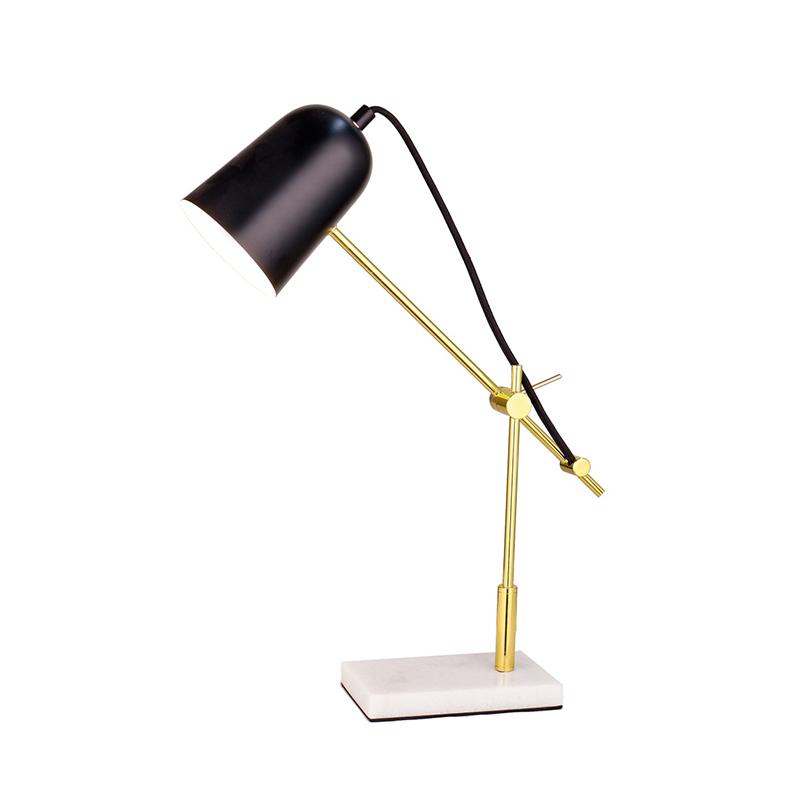 Metal Swing Arm Bedside Lamp with Marble BaseCurved metal shade focuses light for reading, while the polished white marble base adds stability and visual contrast for bedside or table use.View Product →
For chandeliers and multi-arm fixtures, the constraining dimension is usually the arm spacing rather than the room. Measure the clear distance between arms before choosing a shade diameter; a 20 mm overrun will make the shades touch and the fixture look crowded from below.
Match the shade to the task performed beside the lamp, not only to the furniture style in the room.
Two shades can share the same frame, the same fabric and the same dimensions and still differ by 30 percent in cost, because the finish is where labour concentrates. The list below covers the finishes most often quoted in export catalogs.
Self-trim folds the shade fabric over the top and bottom rings, giving a clean edge at the lowest labour cost. Tape trim and contrast binding add a woven or velvet band along the rings, which hides small irregularities and photographs well, but the tape must be applied by hand and kept perfectly level. On a 350 mm drum, a 1 mm drift in the tape line is visible from a metre away.
Pleating is the classic premium finish, and gathering produces a softer, more organic effect. Both require the fabric to be cut oversize, so material consumption rises by 20 to 40 percent compared with a plain panel. Heat setting is essential; without it, pleats relax in a warm container and the shade arrives looking tired.
Perforated and cage metal shades are the strongest statement in the industrial and restaurant vocabulary. The decorative value is in the pattern projected onto the wall, which means the perforation density and hole size matter as much as the metal gauge. Laser cutting allows finer patterns but adds cost and can leave a burr that needs deburring before powder coating.
Rattan, paper rope and seagrass can be woven directly over a metal frame, eliminating the separate fabric panel and creating a shade that reads as furniture rather than lighting. Hand weaving is slower and less uniform than machine work, so expect variation between pieces; that variation is usually a selling point in boutique projects and a quality complaint in mass retail, which is why these ranges are rarely sold on tight visual tolerances.
Two-tone shades with a contrasting inner lining are a low-cost way to add perceived value. A white or metallic inner lining raises reflected output and can lift effective brightness by 10 to 15 percent without changing the bulb or the outer material.
Finishes drive cost more than frames do; agree the trim method, the pleat setting and the tolerance on any applied band before sampling.
The shift to LED has not removed heat problems; it has moved them. LED bulbs produce less heat at the lamp face but concentrate waste heat in the driver at the base, directly under the socket, where airflow is poorest. A tightly fitted fabric shade with a small top opening will still run warm over a 12 W LED lamp after four hours.
Three numbers belong on every shade specification. The first is the maximum bulb wattage, stated for both incandescent and LED equivalents. The second is the minimum clearance between bulb and shade, usually 25 to 30 mm. The third is the shade's maximum continuous operating temperature, which for standard fabric and lining should stay well below the point where the material discolours, typically under 90 degrees Celsius at the inner surface.
Compliance requirements vary by destination, but the pattern is similar. In Europe, luminaires fall under the low voltage and electromagnetic compatibility directives, with RoHS restricting hazardous substances and ErP rules covering replaceable light sources. In North America, UL 1598 for luminaires and UL 153 for portable lamps set the heat and flammability requirements, including a glow-wire test on non-metallic shade materials. In Australia, the electrical safety system and the RCM marking apply. Fabric shades are usually tested as part of the complete luminaire rather than in isolation, which is why a shade change can trigger a retest.
For importers, the practical consequence is that the shade specification must travel with the lamp specification. A supplier who makes both the lamp and the shade can test the assembly once and reuse the report; a supplier who only makes shades will need the lamp factory to supply the fixture for testing, which adds weeks to the timeline.
Treat the shade as part of the luminaire for safety testing; a separate shade approval will not cover the assembled lamp.
Shades are one of the few lamp components where a 3 mm variation is invisible to the eye and a 6 mm variation is a rejection. The difference between a smooth program and a claim-heavy one is usually a specification sheet with tolerances written into it, agreed before the sample is approved.
| Specification field | What to write | Common tolerance |
|---|---|---|
| Bottom diameter | For example 350 mm | Plus or minus 5 mm |
| Top diameter | For example 300 mm | Plus or minus 3 mm |
| Height | For example 220 mm | Plus or minus 5 mm |
| Fitter | Three-arm spider for 8 inch harp | Ring internal diameter plus or minus 1 mm |
| Fabric weight | 180 to 220 gsm linen blend | Plus or minus 5 percent |
| Colour | Pantone TCX reference | Colour difference at or below 1.5 |
| Maximum wattage | 40 W incandescent or 9 W LED | Label per destination standard |
| Packaging | Five-ply carton, shade plus 30 mm | Drop test to ISTA 1A |
Ask for two samples, not one: a golden sample to keep and a production sample to destructively test. Cutting a shade open is the only reliable way to check that the lining is bonded across the full panel, that the top ring is welded rather than stapled, and that the fabric has been cut on the straight grain. Straight-grain cutting is the invisible variable that decides whether a shade hangs square after six months in a warm room.
Most volume buyers work in one of two modes. Under OEM, the buyer supplies the design, the colour reference and often the fabric, and the factory builds to that specification. Under ODM, the factory offers an existing frame and proposes fabric, finish and packaging, which is faster and usually cheaper at low volumes. Both routes need the same tolerance sheet; the difference is who owns the design risk.
A manufacturer with in-house design and sampling capability can usually turn an ODM proposal around in two to three weeks, including a fabric card and a dimensioned drawing. Factories that only assemble bought-in shades will quote faster but rarely hold a tolerance across repeat orders, which matters to a distributor restocking the same item eight months later. If the program runs across several seasons, confirm that the frame tooling is retained and that the fabric is a stock line rather than a one-off dye lot.
Certification paperwork should be requested at quotation stage rather than at shipment. CE, ErP and RoHS documentation for the assembled lamp, plus the test report covering the shade material, is the minimum package for European distribution, and North American buyers will want the UL file reference for the finished fixture. Our OEM and ODM service page sets out how sampling, tooling and documentation are handled for custom shade and lamp programs.
Tolerances, fabric weight and fitter dimensions belong in the purchase order, not in an email thread; that is what keeps repeat orders identical.
Maintenance advice is part of the product, particularly for contract buyers who pass it on to housekeeping teams. The wrong cleaning method damages more shades than normal use does.
Storage matters as much as cleaning. Shades should be stored upright, never stacked, in a dry space below 30 degrees Celsius. Stacking compresses the top ring and leaves a permanent flat spot; damp storage relaxes pleats and can transfer dye from the lining to the fabric.
Ship a one-page care sheet with every order; it reduces claims more cheaply than any packaging upgrade.
What are the most common types of lampshades?Drum, empire, bell, coolie, square or rectangular, oval, hexagon and shaped-edge families such as scalloped and gallery styles. Between them they cover the overwhelming majority of residential, hospitality and retail lighting, with the drum and the empire doing most of the volume. |
How do I know which shade fits my lamp?Measure the base at its widest point and choose a bottom diameter roughly 1.5 to 2 times that width, then check the fitter type. A spider fitter needs a harp of the right height, an uno fitter needs a socket collar, and a clip-on needs a compatible bulb. If the fitter does not match, the shade will not sit correctly regardless of size. |
What is the difference between a spider and an uno fitter?A spider fitter rests on a separate harp and is secured with a finial, so the shade can be changed without tools. An uno fitter threads directly onto the socket collar, giving a lower profile and fewer parts. Spider fittings are more common on export table and floor lamps; uno fittings suit compact bedside and hotel designs. |
Which lampshade material gives the brightest light?Clear or seedy glass transmits the most, followed by opal glass and unlined linen. Lined fabric roughly halves the output of an unlined shade of the same size, and solid metal blocks almost all side light while directing the rest downward. Choose the material for the effect you want, then adjust the bulb to reach the target brightness. |
Are drum or tapered shades better for bedside lamps?Tapered shapes, particularly empire and bell, are usually better beside a bed because they push light downward and keep the bottom rim below a seated person's eye line. Drum shades work well on larger bedside tables where the lamp is taller and the shade sits higher than the sleeper's face. |
Can I use a fabric shade with an LED bulb?Yes, and it is the preferred combination. LED reduces heat at the shade surface, which extends fabric life and allows tighter silhouettes. Keep at least 25 to 30 mm of clearance around the bulb and confirm the driver heat is not trapped under a small top opening. |
What sizes should a supplier quote for an OEM program?Top diameter, bottom diameter, height, fitter type, harp height, socket type, maximum wattage, fabric weight, colour reference and carton dimensions. Any missing field becomes an assumption, and assumptions are where repeat orders drift. |
Do metal shades cause glare?Solid metal shades remove almost all side light and concentrate output downward, so glare is limited to what escapes the bottom opening. Perforated and cage designs scatter light through the holes, which is gentler for a restaurant or hotel lobby but can still be bright at eye level if the fixture hangs low. |
Most shade problems are specification problems: name the shape, the material, the fitter and the tolerance, and the type question answers itself.
The range of lampshade types looks larger than it is. Silhouettes reduce to a handful of geometries, materials to six families, and fitters to three or four mechanisms. What separates a smooth program from a difficult one is not knowing more shapes; it is writing the four or five numbers that define each shade before the first sample is cut.
Start with the fitter and bulb clearance, because those are engineering constraints. Then choose the silhouette for the light behaviour you need, the material for output and maintenance, and the finish for the price point. Add carton allowance early enough that it becomes part of the design rather than a late cost surprise. Do that and the same specification can be quoted by three suppliers and produce three comparable shades.
For buyers assembling a full range across table lamps, floor lamps, chandeliers and wall lights, the useful discipline is to limit the number of frames and fabrics in the program and vary the dimensions instead. Fewer components mean shorter lead times, smaller safety stock and lower tooling cost, and a distributor can restock a single drum shade across several lamp sizes without carrying eight different cartons.
If a specific project needs a shape, a fabric or a fitter that is not in a standard catalog, the practical next step is to send the dimensioned drawing and the target market to a supplier that builds both the lamp and the shade. You can send your specification to our team for a sampling plan, a tolerance sheet and a quotation that reflects the packaging as well as the product.
The best lampshade type is the one whose fitter, dimensions, material and tolerance are all written down before the sample is approved.
A 20 mm change in shade diameter can cost an importer more than the shade itself. On a typical 3,000-piece bedside lamp program, moving from a 280 mm...
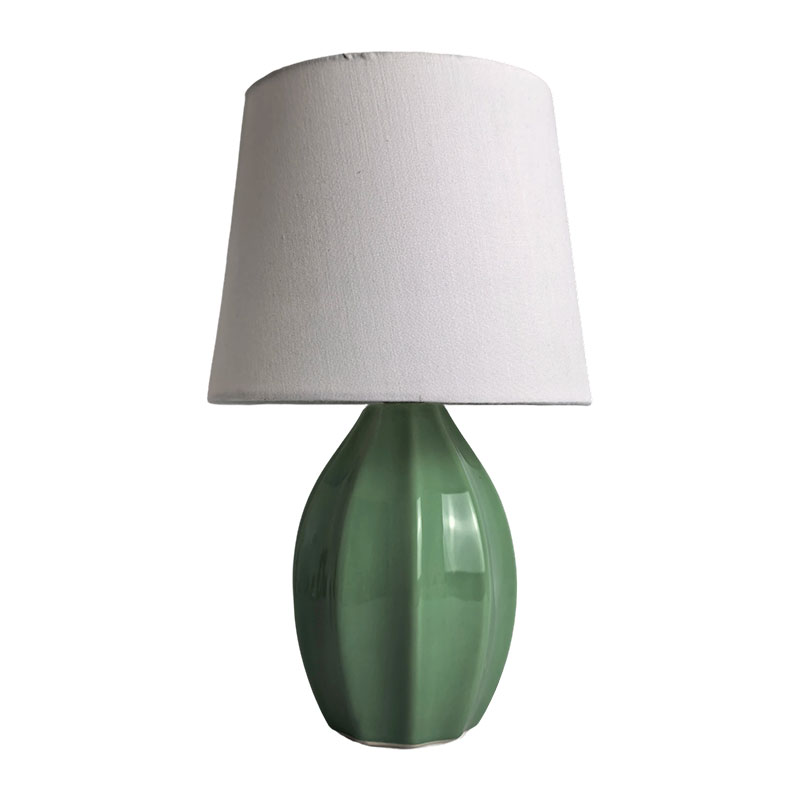
Why a 2 mm Fitting Error Can Stop a Container A European wholesaler approved a 500-piece table lamp order from a photo. The shade looked right, the c...
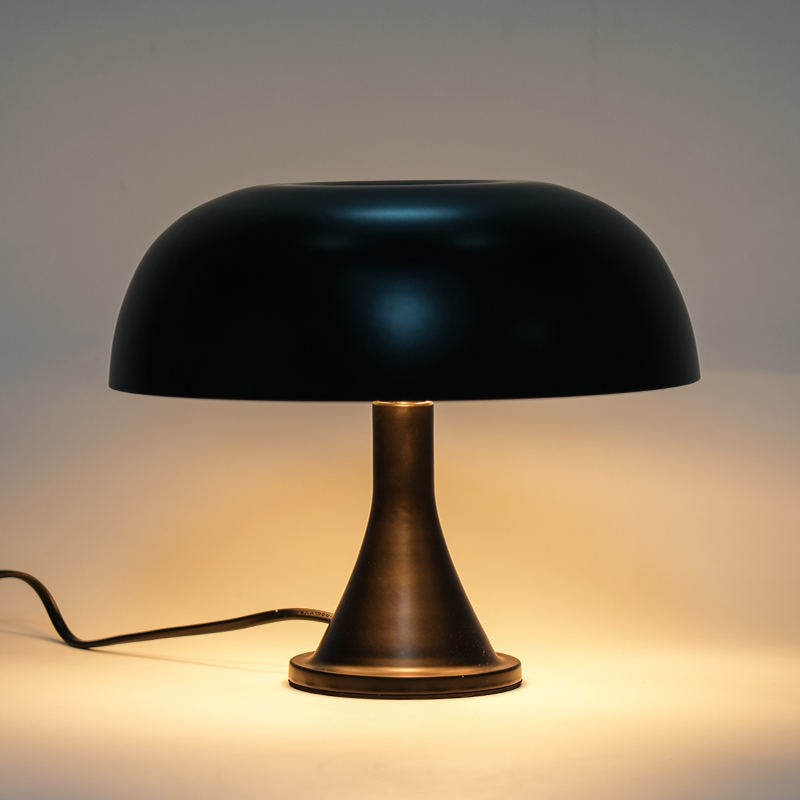
A three-way lamp that only gives two brightness levels is one of the most persistent complaints in decorative lighting, and the fault almost never si...
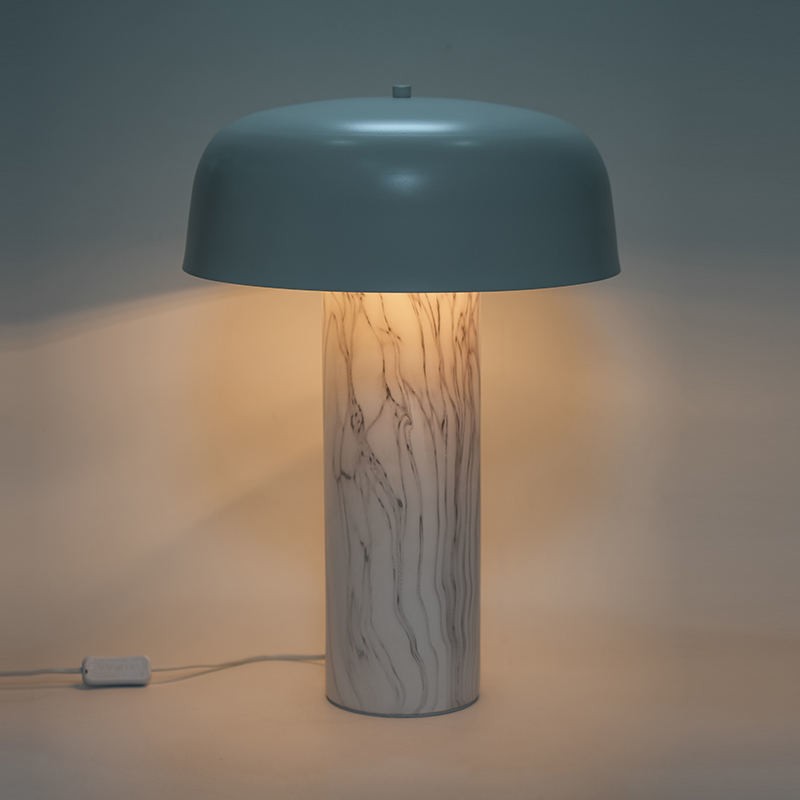
Travertine Table Lamp Buying Starts With the Stone Spec A travertine table lamp can look calm and expensive in a showroom, but the purchase decision ...

 No.11 Gongji South Road, Linshan Town, Yuyao City, Zhejiang Province, China
Copyright ? Yuyao Baolong Electrical Appliance Co., Ltd. All Rights Reserved. Wholesale Decoration Lamp Manufacturer Decoration Lamp Factory


bla@yybaolong.cn

+86-18868663339
+86-574-62067336