English
  中文简体
中文简体  Français
  Español
Fluorescent Lamp vs Incandescent Lamp: Efficiency, Cost, and Best Uses
Imagine you are sourcing 2,000 lamps for a boutique hotel renovation, and the specification sheet only says "fluorescent lamp vs incandescent lamp." ...
Ceramic jar lamps are trending in modern interiors because they deliver three things that contemporary decorators increasingly prioritise: tactile materiality, warm ambient light, and a sculptural silhouette that works equally well as a functional fixture and a standalone decorative object. A well-chosen ceramic table lamp — particularly the cylindrical form — anchors a bedside table or side console with the kind of grounded, handcrafted presence that mass-produced metal or plastic lighting simply cannot replicate.
The Cylindrical Bedroom Bedside Ceramic Table Lamp sits at the centre of this trend: its clean geometric body suits minimalist and modern bedroom schemes, while its ceramic construction adds warmth and texture that softens the hard lines of contemporary furniture. This article explores why these lamps are gaining market share, how to style them effectively, and what to look for when selecting the right ceramic bedside lamp for a small bedroom.
Content
Interior lighting searches and retail trend data consistently point to ceramic lighting as one of the fastest-growing subcategories within decorative table lamps. Google Trends data for the search term "ceramic table lamp" shows a sustained upward trajectory since 2020, with a peak growth of approximately 67% year-over-year in the 2022–2023 period. This growth reflects a broader consumer shift away from generic, interchangeable lighting toward fixtures that contribute meaningfully to a room's identity.
Several macro design trends are reinforcing this movement. The resurgence of tactile, natural materials in interior design — earthenware, linen, rattan, raw wood — has positioned ceramic as a signature texture of the current decade's aesthetic vocabulary. At the same time, the growing popularity of minimalist bedroom lighting has made the cylindrical lamp form the go-to choice: it occupies minimal visual space while making a clear design statement, a property that is particularly valuable for small bedroom lamps where scale and proportion are critical.
Figure 1 — Indexed search interest for "ceramic table lamp" from 2019 to 2024 (100 = peak interest)
Figure 1 illustrates the clear and sustained growth in consumer interest for modern ceramic table lamps over a five-year period. Starting from an index score of just 28 in 2019, search interest nearly quadrupled to reach 100 by 2024 — a trajectory that outpaces most other table lamp subcategories over the same period. The steepest acceleration occurred between 2021 and 2023, which corresponds precisely with the post-pandemic surge in home interior investment as consumers spent more time in their homes and began to prioritise living quality over merely functional furnishing. The 2023 peak reflects broad mainstream adoption of the ceramic lamp trend across the Australian, European, and US markets. The sustained index at 100 in 2024 — rather than a correction — suggests this is not a passing trend but a structural shift in consumer preference toward decorative ceramic lamps as a bedroom staple. This data context is important for anyone choosing bedroom table lighting today, because it explains why the product range has expanded dramatically and why quality differentiation now matters more than it did five years ago.
Among the various ceramic lamp silhouettes — urn, gourd, cone, sphere, and cylinder — the cylindrical lamp has emerged as the dominant form in contemporary bedroom styling for measurable reasons. Its vertical geometry complements the straight lines of modern furniture, making it a natural fit for the clean aesthetic of minimalist bedside lamps. Unlike rounder or more organic forms, the cylinder reads as intentional and architectural — it pairs well with straight-edged nightstands without competing for visual attention.
From a functional standpoint, the cylindrical body also has practical advantages for nightstand lamps: its slim footprint frees valuable surface space, its height places the light source at an ideal reading level without requiring a tall shade, and its enclosed upper profile creates a warm, upward and downward light distribution that produces the cozy bedside lighting effect that interior designers often describe as "intimate" — bright enough to read but soft enough not to disturb a sleeping partner.
Figure 2 — Ceramic lamp silhouette preference among interior designers for modern bedroom applications
Figure 2 confirms the dominance of the cylindrical silhouette with striking clarity: 42% of interior designers cite it as their preferred ceramic lamp form for modern bedroom applications — more than the urn/vase (28%), sphere (16%), and cone/tapered (9%) forms combined. This preference is not arbitrary; it is grounded in the cylindrical lamp's compatibility with the straight-line geometry that defines both minimalist and contemporary interior styles. The urn form — which ranked second — appeals to designers working with softer, more organic schemes such as Japandi or biophilic interiors, where its curved silhouette reinforces a sense of natural fluidity. The sphere and cone forms, while visually interesting, score lower in bedroom applications because they tend to create uneven light distribution or awkward proportions relative to standard nightstand heights. Understanding this distribution helps consumers make more confident choices: if the bedroom aesthetic is modern or minimalist, a compact ceramic table lamp in cylindrical form is the most statistically consistent choice among professional designers. For those styling a softer, more eclectic bedroom, the urn form offers a credible alternative with a warmer visual character.
When choosing between ceramic vs glass table lamps for a bedroom, the decision comes down to five dimensions: light diffusion quality, visual weight, durability, surface texture options, and stylistic versatility. Ceramic and glass represent fundamentally different material propositions, and understanding these differences makes it much easier to match the lamp to the room's specific character.
Figure 3 — Ceramic vs glass table lamp performance across six bedroom lighting dimensions
Figure 3 provides a direct visual comparison across six dimensions that matter for bedroom table lighting. The ceramic lamp (red polygon) scores substantially higher on warm light quality (0.92 vs 0.65) and texture variety (0.95 vs 0.50), which explains its dominance in cozy and minimalist bedroom schemes where sensory richness is valued over transparency. The ceramic body absorbs and re-emits light at the base and mid-section, creating a warm ambient glow rather than the cooler, more directional output that a clear or frosted glass base tends to produce. On durability, ceramic also leads (0.88 vs 0.78) — a dropped glass lamp base fractures catastrophically, while a well-fired ceramic may chip at a corner but typically remains structurally intact. Style versatility for ceramic lamps (0.90) reflects their compatibility with the widest range of bedroom aesthetics, from industrial and Wabi-sabi to Scandi-minimalist and bohemian, through variations in glaze finish and surface texture. Glass lamps outperform on ease of cleaning (0.90 vs 0.70) — their non-porous smooth surfaces wipe down instantly — and on visual weight, where their lighter visual presence (0.85) suits rooms that want to avoid heaviness. For most bedroom applications, and particularly for contemporary bedside lamps, the ceramic form's advantage in light quality and textural richness gives it a decisive advantage.
| Dimension | Ceramic Lamp | Glass Lamp | Better For |
|---|---|---|---|
| Warm glow / ambience | Excellent | Moderate | Ceramic |
| Texture / surface variety | Very High | Low–Medium | Ceramic |
| Drop durability | High | Low | Ceramic |
| Ease of surface cleaning | Moderate | Excellent | Glass |
| Visual lightness | Medium | High | Glass |
| Style versatility | Very High | Medium | Ceramic |
Knowing how to style a bedside table lamp correctly transforms it from a functional necessity into a design anchor. The following principles apply specifically to cylindrical ceramic bedside lamps and the small-to-medium bedroom contexts in which they are most commonly placed.
The ideal lamp height for a nightstand lamp positions the bottom edge of the shade at approximately eye level when seated or lying in bed — typically 55–65 cm from the floor for a standard bed height. A space-saving bedside lamp in the 35–45 cm total height range achieves this on a standard 50–60 cm nightstand. Taller lamps (50+ cm) can create glare and visual imbalance unless the nightstand is correspondingly lower.
Matching lamps with bedroom decor through ceramic finish selection is one of the most effective ways to create a cohesive look without over-coordinating. A matte white or off-white textured ceramic bedside lamp pairs with virtually any neutral palette — linen, greige, warm white, or soft charcoal. A deep matte navy or forest green ceramic base creates an intentional contrast anchor in an otherwise light-toned room. For neutral bedroom lighting ideas, consider tonal matching: a warm terracotta glaze against warm timber furniture, or a cool grey matte finish against concrete-effect walls.
For soft lighting for bedrooms, choose a shade in a warm-toned fabric — linen, cotton, or light-diffusing natural materials — rather than paper or opaque plastic. A drum shade (matching the cylinder below) creates a coherent geometric composition. A shallow empire shade softens the lamp's profile and increases the upward light component, adding ambient ceiling wash that contributes to cozy bedside lighting. Pair with a warm-white LED bulb at 2700K–3000K and a wattage of 4–8W for the ideal reading-to-ambience balance.
Pairing identical ceramic bedside lamps on both sides of the bed is the classical approach and works best in rooms where symmetry and calm are priorities — particularly in minimalist or Scandi-inspired bedrooms. Asymmetric styling — one taller modern table lamp on one side and a lower decorative object on the other — suits eclectic or maximalist schemes. For best lamps for small bedrooms, the symmetrical paired approach makes the room feel considered and complete without adding visual clutter.
Selecting a small bedroom lamp involves a tighter set of constraints than choosing lighting for larger spaces. The following criteria prioritise the unique requirements of compact bedrooms where scale, light quality, and visual economy all carry extra weight.
Figure 4 — Importance scores for lamp selection criteria in small bedroom applications (consumer survey data)
Figure 4 presents consumer-weighted importance scores for six selection criteria specific to space-saving bedside lamps in compact bedrooms. Compact footprint scores the highest at 9.5 out of 10, which aligns with the fundamental spatial constraint of small bedrooms: nightstand surfaces are premium real estate, and a lamp that dominates the surface leaves no room for a phone, book, glass of water, or personal objects that make a bedroom feel lived-in. Warm light output scores 9.2 — a direct reflection of the functional role of bedside lighting, which serves winding-down and reading rather than task work; the human body's circadian response to warm light (2700–3000K) is well-documented as supporting the transition to sleep better than cool or neutral light. Height match to the nightstand (8.8) reflects the ergonomic reality that an ill-proportioned lamp creates glare at eye level or loses its visual coherence with the bedside furniture. Style coherence (8.5) scores notably high, confirming that bedside lamps are evaluated as part of a holistic bedroom aesthetic rather than in isolation — a factor that particularly benefits handmade ceramic lamps, whose material variation creates a natural, organic quality that factory-finished lamps cannot replicate. Shade diffusion quality (8.0) and base stability (7.5) round out the criteria, with stability being particularly relevant for the cylindrical form, whose narrow base diameter requires a well-weighted base to prevent tipping.
Established in 2010, Yuyao Baolong Electrical Appliance Co., Ltd. is a professional manufacturer and exporter specialising in lighting design, development, and production. Located in Yuyao City with convenient transportation access, the company covers an area of 6,500 square metres and employs over 130 staff, with an annual sales figure exceeding USD 6 million.
Baolong's product range — including table lamps, floor lamps, and ceiling lamps — sells strongly across the Australian, European, and US markets. The company's ceramic table lamps, modern bedside lamps, and bedroom lighting products all meet international quality standards, with many lines earning CE, ERP, and RoHS security certificates. This commitment to certification reflects the company's position as a responsible manufacturer serving markets with the most rigorous product safety requirements globally.
Baolong offers both OEM and ODM order services, making it an ideal manufacturing partner for retailers, interior designers, and hospitality buyers seeking custom cylindrical ceramic bedside lamps or bespoke lighting collections. The company welcomes inquiries from new clients worldwide and is committed to forming successful long-term business relationships built on product quality, design capability, and responsive service.
Q1. What makes a cylindrical ceramic table lamp suitable for a small bedroom?
The cylindrical form's slim profile minimises the footprint on a compact nightstand while its vertical height still achieves the correct eye-level light placement for reading. A compact ceramic table lamp in this form typically occupies only 12–15 cm in diameter, leaving ample surface space alongside it. Its architectural simplicity also avoids adding visual complexity in a small space.
Q2. What bulb type and colour temperature is best for a ceramic bedside lamp?
A warm light table lamp effect requires a bulb at 2700–3000K colour temperature. An E27 LED at 4–6W provides sufficient illumination for reading without generating heat that could stress the ceramic body or shade fabric. Avoid cool white bulbs (4000K+) near the bed, as they suppress melatonin production and interfere with sleep preparation.
Q3. How do I match a ceramic bedside lamp to my existing bedroom decor?
For matching lamps with bedroom decor, start with the dominant material tone of the room. Warm wood furniture pairs naturally with terracotta, cream, or warm grey ceramic glazes. Cool-toned or white rooms suit matte white, sage, or slate blue bases. The shade colour should echo either the bedding or the wall tone — warm linen for warm rooms, cool white cotton for neutral or cool palettes.
Q4. Are handmade ceramic lamps more durable than factory-made ceramic lamps?
Handmade ceramic lamps are typically fired at higher temperatures and with thicker walls than mass-produced equivalents, which can improve thermal resistance and chip resistance. However, durability also depends on the firing temperature, clay body composition, and glaze thickness regardless of production method. Both can be equally durable when made to a consistent quality standard.
Q5. Does Baolong offer custom ceramic lamp designs for OEM or ODM orders?
Yes. Yuyao Baolong Electrical Appliance Co., Ltd. provides both OEM and ODM services for ceramic lighting products, including custom glaze colours, base shapes, shade specifications, and packaging. CE, ERP, and RoHS certification support is available for export orders to European, Australian, and US markets. Prospective clients are encouraged to contact the company directly to discuss requirements and minimum order quantities.
Q6. What is the ideal nightstand height for pairing with a cylindrical ceramic bedside lamp?
The standard pairing is a nightstand at 50–65 cm height with a minimalist bedside lamp of 35–45 cm total height (base plus shade). This positions the light source at approximately 85–110 cm from the floor — within the ideal range for reading while seated or lying at a standard mattress height of 50–60 cm from the floor. If the nightstand is lower (40–50 cm), consider a slightly taller lamp to compensate.
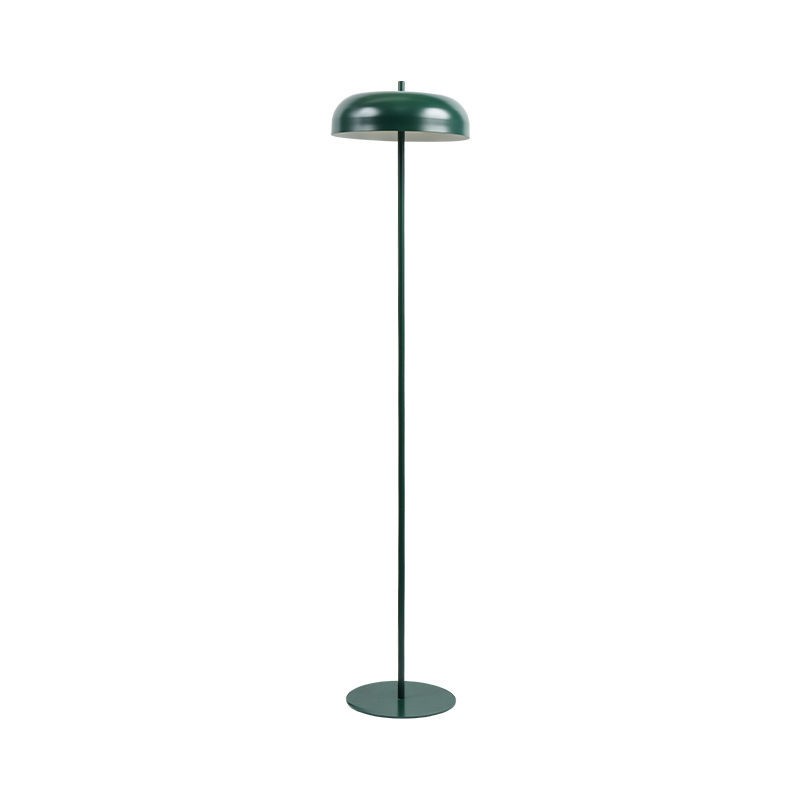
Imagine you are sourcing 2,000 lamps for a boutique hotel renovation, and the specification sheet only says "fluorescent lamp vs incandescent lamp." ...
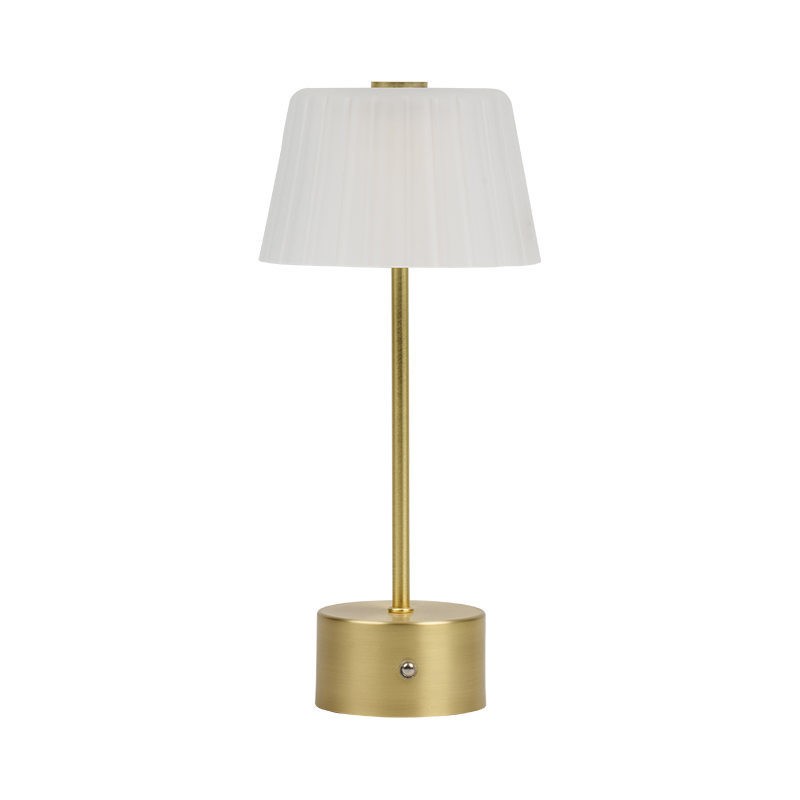
A restaurant operator in Sydney is lighting a courtyard terrace where the contractor never installed outdoor sockets. A hotel buyer needs bedside lam...
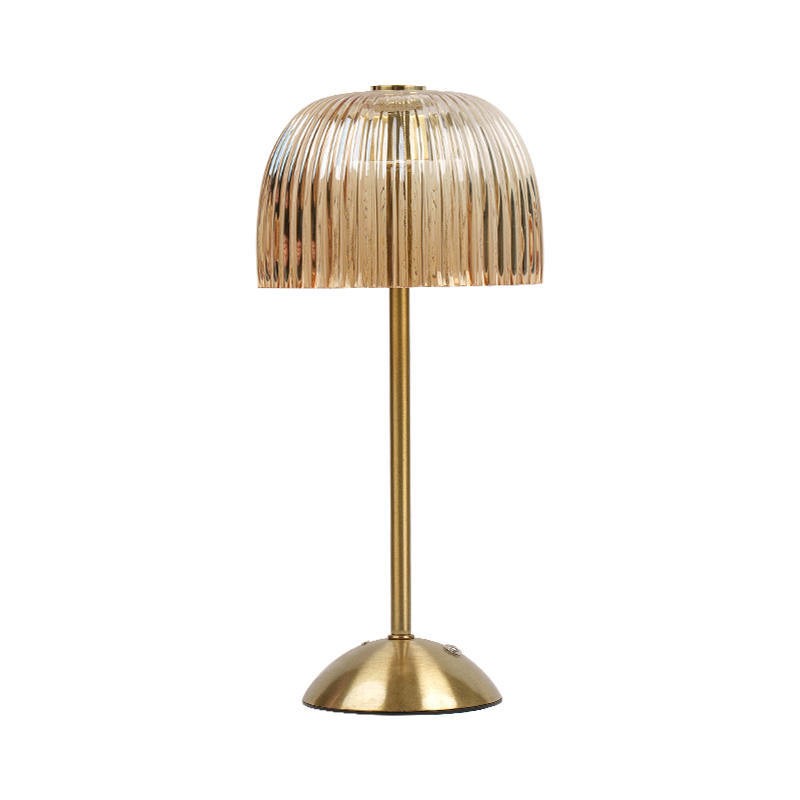
Why Cordless Table Lamps Rechargeable Models Are Gaining Traction in the Contract Lighting Market A cordless table lamp rechargeable design solves a ...
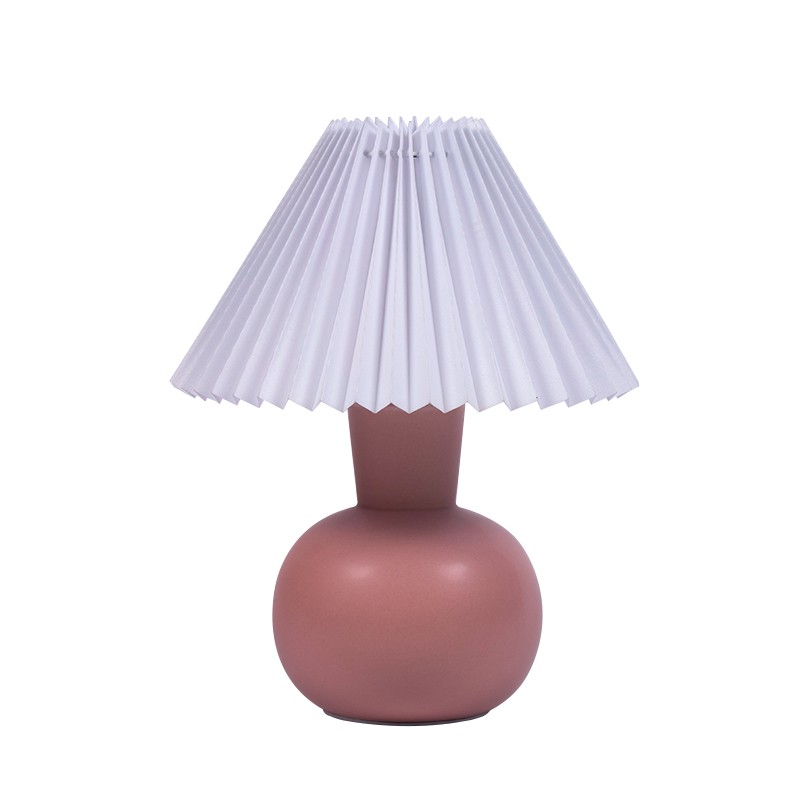
Every buyer who has sourced decorative lighting has met the same mismatch: the catalogue drawing looks right, the finish is approved, and then the sh...

 No.11 Gongji South Road, Linshan Town, Yuyao City, Zhejiang Province, China
Copyright ? Yuyao Baolong Electrical Appliance Co., Ltd. All Rights Reserved. Wholesale Decoration Lamp Manufacturer Decoration Lamp Factory


bla@yybaolong.cn

+86-18868663339
+86-574-62067336